Speed Limits on Mountain Roads: Why Driving Slower Matters
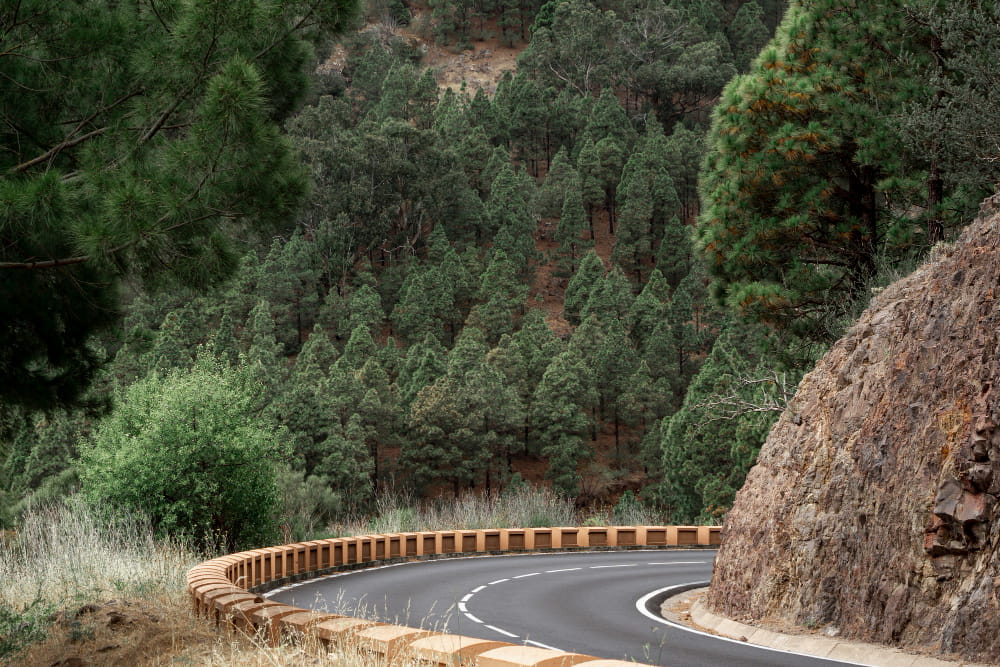
Driving on mountain roads is very different from driving on highways or city roads. Steep gradients, sharp curves, narrow lanes, blind corners, changing weather and unpredictable road conditions make mountain driving more demanding, even for experienced drivers.
This is why speed limits on mountain roads play such an important role in road safety. A speed that feels comfortable on a straight highway can become dangerous when approaching a hairpin bend, steep descent or narrow section of a hill road.
Drivers travelling through mountainous regions should understand that the posted speed limit represents a maximum legal limit for that particular road section. It does not necessarily mean that driving at that speed is safe under every condition.
Why Are Speed Limits Lower on Mountain Roads?
Mountain roads are designed around the natural terrain. Unlike major highways, where long and relatively straight sections allow drivers to maintain consistent speeds, hill roads frequently change direction and elevation.
Sharp bends are one of the biggest reasons lower speeds are necessary. A driver approaching a curve cannot always see vehicles, pedestrians, animals, fallen rocks or other obstacles on the road ahead.
The road may also become considerably narrower at certain points. In some locations, two vehicles travelling in opposite directions may have limited space to pass each other safely.
Steep gradients introduce another challenge. Vehicles travelling downhill naturally gain speed, requiring drivers to maintain greater control over braking and vehicle movement.
As a result, speed management on mountain roads is not simply about following a number displayed on a signboard. Drivers must continuously adjust their speed to the terrain, visibility, traffic and weather.
What Is the Speed Limit on a Mountain Road?
There is no single universal speed limit that applies to every mountain road.
Speed limits depend on the country, state or local jurisdiction, road classification, vehicle category and conditions of the individual road section.
In India, Section 112 of the Motor Vehicles Act provides the legal framework for speed limits. It also allows state governments or authorised authorities to impose specific speed restrictions where necessary for public safety or because of the nature of a particular road or bridge.
This distinction is particularly important for mountain roads.
A road may fall within a broader national or state speed category while a specific mountainous section has a substantially lower posted limit because of curves, settlements, construction, landslide risk or other local conditions.
Drivers should therefore follow the speed-limit signs displayed on the road rather than assume that the general highway speed limit applies.
Why Mountain Roads Require Lower Driving Speeds
The fundamental issue with speed on a mountain road is the amount of time and distance available to react.
Imagine approaching a blind curve and discovering a stopped vehicle immediately after the bend. At a lower speed, the driver has more time to identify the hazard, brake and control the vehicle.
At a higher speed, both reaction distance and braking distance become more significant.
This becomes especially important on mountain roads because visibility is frequently restricted by hillsides, vegetation, buildings and sharp bends.
Road surfaces can also change unexpectedly. Loose gravel, mud, water, potholes or debris from minor rockfalls can significantly reduce vehicle stability.
The safest speed is therefore not always the highest legally permitted speed. It is a speed that allows the driver to remain in control and stop safely within the visible road ahead.
Hairpin Bends and Sharp Curves
Hairpin bends are among the most recognisable features of mountain roads.
They require vehicles to make extremely sharp changes in direction, often while climbing or descending a steep gradient.
Entering a hairpin bend too quickly can make it difficult for the driver to maintain the correct road position. The risk becomes greater when a large vehicle, such as a bus or truck, is approaching from the opposite direction and requires additional space to negotiate the curve.
Drivers should reduce their speed before entering the bend, rather than braking aggressively while already turning.
Maintaining a controlled speed also makes it easier to respond if another vehicle appears unexpectedly around a blind corner.
Why Downhill Speed Requires Extra Attention
Descending a mountain road can sometimes be more demanding than climbing one.
Gravity naturally accelerates a vehicle downhill. If a driver depends continuously on the brakes to control that speed, the braking system can become excessively hot during a long descent.
A controlled descent therefore requires appropriate use of the vehicle’s transmission and braking system.
The objective is to prevent the vehicle from gaining excessive speed rather than repeatedly allowing it to accelerate and then braking heavily.
Drivers should select an appropriate gear and follow the vehicle manufacturer’s guidance for descending steep gradients. Modern automatic, hybrid and electric vehicles can have different downhill-control and regenerative-braking characteristics, making familiarity with the specific vehicle particularly important.
Speed Limits During Rain, Fog and Snow
Weather can transform mountain-road conditions within minutes.
Rain can reduce tyre grip and increase braking distance. Heavy rainfall may also bring mud, stones or other debris onto the road.
Fog creates another major hazard because it reduces the distance a driver can see ahead. Even when the posted speed limit remains unchanged, travelling at that maximum speed may no longer be appropriate.
Snow and ice introduce additional risks in colder mountainous regions by dramatically reducing traction.
The principle is simple: the poorer the visibility and road grip, the greater the need to reduce speed.
A driver should always be able to react within the portion of road that is clearly visible ahead.
Speed Around Blind Corners
Blind corners deserve particular attention on hill roads.
A mountain or rock face can completely block the driver’s view of approaching traffic. Drivers may also encounter buses, trucks, motorcycles, cyclists, pedestrians or animals immediately after turning into a curve.
India’s Motor Vehicles (Driving) Regulations, 2017 specifically require drivers to keep to the left when approaching a bend or hill where the view ahead is restricted.
Reducing speed before a blind corner provides additional reaction time and makes it easier to remain within the correct part of the road.
Drivers should also pay close attention to road markings, warning signs and instructions regarding overtaking.
Overtaking on Mountain Roads Can Be Dangerous
Overtaking requires considerably more judgement on mountain roads than on open highways.
The driver needs enough visibility and road distance to complete the manoeuvre without interfering with approaching traffic.
On a road with repeated blind bends, that opportunity may be extremely limited.
Attempting to overtake without a clear view of approaching traffic can create a serious head-on collision risk.
Drivers should therefore obey no-overtaking signs and road markings and avoid overtaking when approaching bends, hill crests or other locations where visibility is restricted.
Saving a few minutes of travel time is never worth taking a risk without sufficient visibility.
How Vehicle Type Affects Safe Mountain-Road Speed
Not every vehicle behaves in the same way on a mountain road.
A small passenger car, motorcycle, heavily loaded truck and bus have different dimensions, weights, braking characteristics and handling capabilities.
Heavy vehicles generally require more space to manoeuvre and may require greater stopping distances. Large vehicles can also need additional road width when negotiating tight hairpin bends.
Motorcyclists face different risks. Loose gravel, wet surfaces and damaged road edges can have a much greater effect on a two-wheeler than on a four-wheel vehicle.
Drivers should therefore consider the characteristics of their vehicle rather than copying the speed of another road user.
Why Following the Posted Speed Limit Is Essential
In India, general maximum speed limits differ according to both road type and vehicle category. However, authorities can impose lower limits on particular roads or stretches for safety reasons.
This is why drivers should never assume that a speed permitted on one highway will automatically be permitted on another.
On mountain routes, speed-limit signs may change as road conditions change.
A relatively open section may be followed by a settlement, sharp bend, narrow bridge or steep descent where a lower speed becomes necessary.
Road signs should therefore be treated as active driving information rather than background instructions.
Safe Speed Is Not Always the Maximum Speed Limit
One of the most important principles of mountain driving is understanding the difference between a speed limit and a safe speed.
A posted limit establishes the maximum permitted speed for that road section. Actual conditions may require the driver to travel considerably slower.
If the road is wet, visibility is poor, traffic is heavy or the driver is approaching a sharp bend, reducing speed may be necessary even when the legal limit is higher.
The same principle applies at night. Headlights illuminate only a limited portion of the road, while bends can further restrict visibility.
A responsible driver adjusts speed according to the road rather than treating the maximum limit as a target.
Common Speed-Related Mistakes on Mountain Roads
Many dangerous situations on hill roads begin with drivers carrying highway-driving habits into mountainous terrain.
Entering curves too quickly is a common problem. Another is accelerating aggressively on short straight sections and then braking heavily before every bend.
Following another vehicle too closely can also become dangerous because the vehicle ahead may suddenly slow for a curve, obstacle or approaching traffic.
Driving downhill in a manner that causes excessive reliance on the brakes can create additional risks during long descents.
The safer approach is smooth, controlled driving with sufficient distance from the vehicle ahead and enough time to anticipate changes in the road.
Mountain Road Speed Limits Are About Control, Not Just Compliance
The purpose of speed limits on mountain roads is not simply to restrict how quickly a driver reaches a destination.
They are designed to give drivers more opportunity to respond to a road environment where hazards can appear suddenly.
Sharp bends, steep gradients, narrow lanes, limited visibility, changing weather and unpredictable road surfaces all reduce the margin for error.
A lower speed gives the driver more time to observe the road, make decisions and maintain vehicle control.
Conclusion
Speed limits on mountain roads are essential because mountainous terrain creates driving conditions that are fundamentally different from those on ordinary highways.
There is no single speed that is appropriate for every mountain road. Legal limits vary according to location, road classification, vehicle type and locally imposed restrictions. Drivers should always follow posted speed-limit signs and any temporary traffic restrictions.
More importantly, the posted limit should be considered a maximum rather than a speed that must be maintained.
When approaching hairpin bends, blind corners, steep descents, narrow roads or areas affected by rain, fog, snow or poor road surfaces, travelling below the posted limit may be necessary.
Safe mountain driving ultimately depends on one principle: drive at a speed that allows you to remain in control of the vehicle and respond safely to what you can see ahead.
On mountain roads, reaching the destination safely matters far more than reaching it quickly.
Share this content:


Post Comment