India’s EV Supply Chain Ecosystem: Building the Backbone of Electric Mobility
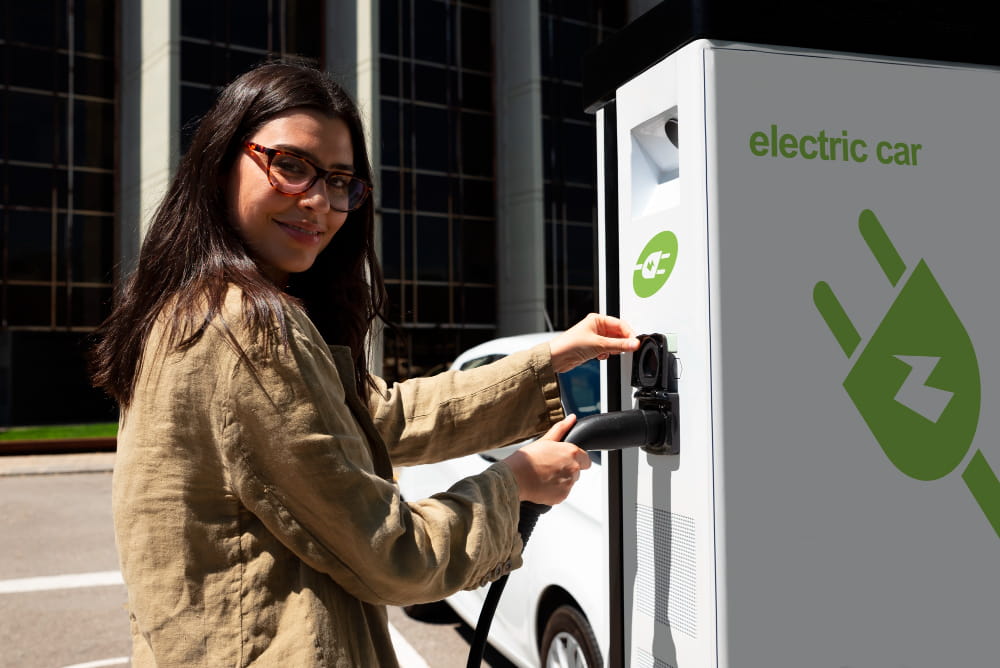
India’s electric vehicle industry is entering a decisive phase. Until recently, much of the conversation around electric mobility focused on EV sales, government incentives, new vehicle launches and charging infrastructure. But as the market matures, attention is shifting toward a more fundamental question: Can India build a strong domestic EV supply chain ecosystem?
The answer will determine much more than the number of electric vehicles running on Indian roads. A competitive EV supply chain can influence manufacturing costs, technology development, employment, energy security and India’s position in the global electric mobility industry.
An electric vehicle is the final product of a much larger industrial ecosystem. Behind every EV sits a network of raw-material suppliers, battery manufacturers, electronics companies, component manufacturers, software developers, vehicle manufacturers, charging providers and recycling companies. Building capabilities across this value chain is becoming one of the most important opportunities within India’s EV industry.
Understanding India’s EV Supply Chain Ecosystem
The EV supply chain begins long before a vehicle reaches the manufacturing plant.
At the upstream end are critical minerals and raw materials required for batteries, motors and electronic components. Lithium, nickel, cobalt, graphite, copper and rare-earth elements have become strategically important as electric mobility expands globally.
These materials move through processing and refining before becoming battery materials and other specialised components. Battery cells are then manufactured and integrated into battery packs along with battery management systems and thermal-management technologies.
Beyond batteries, an electric vehicle requires electric motors, controllers, inverters, onboard chargers, DC-DC converters, wiring systems, semiconductors and increasingly sophisticated software.
Vehicle manufacturers bring these technologies together into electric two-wheelers, three-wheelers, passenger vehicles, commercial vehicles and buses.
The ecosystem continues even after the vehicle is sold. Charging infrastructure, energy management, servicing, battery diagnostics and eventually battery recycling all form part of the broader EV ecosystem in India.
This makes electric mobility not simply an automotive transition, but the creation of an interconnected manufacturing, energy and technology industry.
India’s Existing Automotive Industry Creates an Advantage
India already has one of the world’s major automotive manufacturing ecosystems. Decades of conventional vehicle manufacturing have created a large supplier network and significant capabilities in engineering, manufacturing and automotive components.
This foundation provides India with an important advantage as the industry transitions toward electric mobility.
However, EVs require a different component mix from internal combustion engine vehicles. Components associated with engines, fuel systems and exhaust systems become less important, while batteries, electric motors, power electronics, semiconductor-based systems and software become increasingly valuable.
For India’s auto-component industry, this transition creates both disruption and opportunity.
Existing suppliers have an opportunity to expand into EV-specific components, while new companies are emerging in areas such as battery technology, power electronics, charging infrastructure and vehicle software.
The result is an EV supply chain that combines India’s established automotive manufacturing base with a growing clean-technology ecosystem.
Battery Manufacturing Is at the Centre of India’s EV Supply Chain
The battery is one of the most important components of an electric vehicle and represents a significant part of its overall cost.
India has developed battery-pack assembly capabilities, but creating a deeper domestic battery industry requires capabilities further upstream in the value chain.
Cell manufacturing is particularly important.
When battery cells or their key materials are imported and only assembled domestically into packs, a substantial portion of the underlying value chain remains outside the country. Developing domestic cell manufacturing can therefore help India capture more manufacturing value while improving supply-chain resilience.
India is consequently encouraging investment in advanced battery manufacturing through initiatives such as the Production Linked Incentive programme for Advanced Chemistry Cell manufacturing.
The longer-term opportunity extends beyond cell factories. A mature battery ecosystem also requires cathode and anode materials, electrolytes, separators, battery-management systems, testing facilities, manufacturing equipment and research capabilities.
This is where India’s battery manufacturing opportunity becomes considerably larger than the battery itself.
Critical Minerals Remain a Strategic Challenge
India’s EV ambitions are closely connected with the availability of critical minerals.
Lithium is one of the most discussed examples because of its role in lithium-ion batteries, but the supply-chain challenge extends to several other minerals and materials.
Many critical-mineral supply chains are geographically concentrated. As global EV and energy-storage demand grows, competition for reliable supplies is increasing.
For India, this means domestic EV manufacturing cannot be viewed separately from mineral security.
The country will need a combination of domestic exploration, overseas sourcing relationships, processing capabilities, technology development and recycling to create a more resilient supply chain.
The objective does not necessarily have to be complete self-sufficiency. Modern manufacturing supply chains are global by nature. The more realistic objective is to reduce excessive dependence on individual countries, suppliers or technologies while developing domestic capabilities in strategically important areas.
EV Components Are Creating a New Manufacturing Opportunity
While batteries attract the greatest attention, India’s EV component ecosystem is much broader.
Electric motors and motor controllers determine how electrical energy is converted into vehicle movement. Inverters and power electronics control the flow of electricity between the battery and motor. Onboard chargers and DC-DC converters manage power across different parts of the vehicle.
Thermal-management systems are becoming increasingly important because battery performance, charging speed, safety and lifespan are closely connected with temperature management.
Semiconductors also play a larger role as vehicles become increasingly electronic and software-driven.
These changes are creating opportunities for Indian manufacturers to move from traditional mechanical components toward higher-value electrical and electronic systems.
Over time, the depth of India’s EV component manufacturing ecosystem could become just as important as the number of EV assembly plants operating in the country.
Charging Infrastructure Is Becoming an Industry of Its Own
EV charging infrastructure is another critical part of India’s electric mobility supply chain.
As the number of EVs increases, India will require charging solutions for homes, workplaces, highways, commercial fleets, residential communities and public locations.
This creates demand not only for charging stations but also for the components and technologies behind them.
Chargers require power electronics, connectors, cables, electrical equipment and communication systems. Charging networks also depend on software for charger monitoring, payments, user authentication, energy management and maintenance.
Fleet electrification introduces another layer of complexity because large commercial fleets may need high-capacity charging infrastructure and sophisticated systems for scheduling vehicles and managing electricity consumption.
As a result, charging infrastructure should be viewed as both an infrastructure opportunity and a manufacturing and technology opportunity.
Software Is Becoming Part of the EV Supply Chain
One of the biggest differences between conventional vehicles and the emerging generation of EVs is the growing importance of software.
Battery management systems continuously monitor battery performance and safety. Vehicle-control software manages different electronic systems. Connected-vehicle platforms can monitor location, energy consumption and vehicle performance.
For commercial fleets, software can help determine charging schedules, predict maintenance requirements and optimise vehicle utilisation.
Battery analytics may become particularly important as the industry grows. Understanding the health and remaining useful life of a battery can influence vehicle resale values, warranty management, second-life applications and recycling decisions.
India’s strong software and engineering talent could therefore become an important competitive advantage within the global EV ecosystem.
The future EV supply chain will not be purely physical. It will increasingly combine manufacturing, electronics, energy and software.
Battery Recycling Could Strengthen India’s Resource Security
Battery recycling is likely to become one of the most strategically important parts of India’s EV ecosystem.
EV batteries contain valuable materials that can potentially be recovered after the battery reaches the end of its useful life.
This creates the possibility of a circular battery economy.
Instead of viewing used batteries purely as waste, they can increasingly be treated as a source of valuable materials. Batteries can be collected, evaluated for second-life applications and eventually recycled to recover materials that can re-enter manufacturing supply chains.
For a country that depends significantly on international sources for several critical materials, this has strategic importance.
As India’s EV population grows, the volume of batteries eventually reaching end of life will also increase. Developing collection networks, recycling technology, material-recovery capabilities and traceability systems early could help India create a valuable domestic secondary-material supply chain.
In the long term, recycling could effectively create an urban mine, where materials already circulating within the economy become a source of future manufacturing inputs.
Government Policy Is Shaping India’s EV Manufacturing Ecosystem
Government policy continues to play an important role in the development of India’s EV industry.
The policy environment has gradually expanded from encouraging vehicle adoption toward supporting domestic manufacturing, battery production, charging infrastructure, critical minerals and recycling.
This shift is important.
Consumer incentives can accelerate the initial adoption of electric vehicles, but a sustainable EV industry ultimately requires competitive manufacturing economics.
The next stage of India’s EV development will therefore depend on whether policy can encourage companies to build capabilities that remain globally competitive even as direct EV incentives evolve.
Manufacturing scale, research and development, supplier development, infrastructure and access to capital will all influence this transition.
Can India Reduce Its Dependence on EV Imports?
Complete localisation is neither immediate nor necessarily the most practical objective.
EV supply chains are global, and countries specialise in different technologies, materials and manufacturing processes.
The more important question is where India should build strategic domestic capabilities.
Battery cells, battery materials, power electronics, electric motors, semiconductor-related technologies, charging equipment and recycling represent areas where greater domestic capabilities could strengthen the industry.
At the same time, India will continue participating in international supply chains for minerals, technology and specialised components.
The strongest model is therefore likely to combine domestic manufacturing with diversified global sourcing.
This would allow India to participate in global EV supply chains while reducing vulnerability to excessive dependence on any single external source.
The Next Phase of India’s EV Industry
India’s EV market is moving from an adoption story toward an industrialisation story.
Vehicle sales will remain an important measure of progress, but they will not tell the entire story.
The deeper indicators will be the amount of battery manufacturing taking place domestically, the development of local EV component suppliers, investment in power electronics and software, the expansion of charging infrastructure and India’s ability to recover critical materials through recycling.
The evolution could be described as a journey from importing to assembling, from assembling to manufacturing, and eventually from manufacturing to innovating.
If India succeeds in moving across these stages, the country can capture a much larger share of the economic value created by the electric mobility transition.
Conclusion
India’s EV supply chain ecosystem is becoming one of the most important parts of the country’s transition toward electric mobility.
The opportunity extends far beyond electric vehicle manufacturers. Batteries, critical minerals, power electronics, electric motors, charging infrastructure, software and recycling are creating an interconnected industrial ecosystem.
Challenges remain, particularly around upstream materials, battery technology, manufacturing scale and import dependence. But India’s large domestic market, existing automotive manufacturing base and engineering capabilities provide a strong foundation for building a more integrated EV value chain.
The companies and countries that dominate the electric mobility era may not simply be those that sell the most electric vehicles. They will be those that develop capabilities across the technologies, materials and infrastructure behind them.
For India, that makes the next stage of the EV transition particularly significant.
The future of India’s EV industry will be determined not only by how many electric vehicles are manufactured and sold in the country, but by how much of the technology, manufacturing capability and value behind those vehicles is built within India’s own EV supply chain ecosystem.
Share this content:
Post Comment