EV Battery Technology in 2026: Latest Innovations, Trends and the Future of Electric Mobility

Electric vehicle technology is evolving quickly, and battery innovation remains at the center of that transformation. In 2026, the EV industry is moving beyond the simple pursuit of longer driving range. Battery manufacturers and automakers are increasingly focused on faster charging, lower production costs, improved safety, longer battery lifespan and reduced dependence on scarce raw materials.
Solid-state batteries continue progressing toward commercialization, sodium-ion technology is attracting attention as a lower-cost alternative for selected applications, and silicon-enhanced anodes are improving the performance of conventional lithium-ion cells. Meanwhile, LFP and emerging LMFP chemistries are strengthening their position in the mass-market EV segment.
These developments suggest that the future of electric mobility will not depend on one revolutionary battery. Instead, several technologies are evolving simultaneously to meet different vehicle, cost and performance requirements.
EV Battery Technology in 2026: Where the Industry Stands
Lithium-ion batteries remain the foundation of the global electric vehicle market in 2026, but the technology itself is changing.
Battery development is increasingly about finding the right balance between energy density, charging performance, safety, durability and cost. A premium long-range electric SUV has very different battery requirements from an affordable city EV, which means manufacturers are beginning to optimize battery chemistry for specific vehicle categories.
This is creating a more diversified battery market.
LFP batteries remain attractive for vehicles where affordability, durability and safety are priorities. Nickel-rich lithium-ion chemistries continue to have advantages where higher energy density is important. Sodium-ion batteries are emerging as another option for cost-sensitive applications, while solid-state technology remains one of the industry’s most closely watched longer-term developments.
Solid-State Batteries Move Closer to Commercialization
Solid-state batteries remain one of the most significant areas of EV battery research in 2026.
Traditional lithium-ion batteries generally use liquid electrolytes to transport ions between electrodes. Solid-state batteries replace this liquid electrolyte with a solid material, creating the potential for higher energy density and improved thermal safety.
Higher energy density could allow manufacturers to increase EV driving range without simply installing larger and heavier battery packs. Alternatively, automakers could maintain similar driving ranges while reducing battery size and vehicle weight.
Safety is another potential advantage. Replacing flammable liquid electrolytes could help reduce some thermal risks associated with conventional lithium-ion battery designs.
However, the major challenge remains large-scale manufacturing.
Producing solid-state cells reliably, consistently and affordably at automotive volumes is much more difficult than producing prototype cells. For that reason, solid-state batteries should not be viewed as an immediate replacement for today’s lithium-ion technology.
Instead, 2026 represents an important period in the transition from laboratory development and pilot manufacturing toward eventual commercial production.
Sodium-Ion Batteries Emerge as a Lower-Cost Alternative
Sodium-ion battery technology is becoming increasingly relevant to discussions about the future of affordable electric vehicles.
Rather than relying on lithium as the primary charge-carrying material, sodium-ion batteries use sodium, an element that is abundant and widely available.
This could provide important supply-chain advantages.
As EV production increases globally, manufacturers are looking for ways to reduce their dependence on expensive or geographically concentrated battery materials. Sodium-ion technology provides an alternative pathway that could complement rather than replace lithium-ion batteries.
The primary limitation is energy density. Sodium-ion cells generally store less energy for their weight than leading lithium-ion chemistries. This makes them less attractive for premium vehicles designed to achieve maximum driving range.
For affordable urban EVs, short-range vehicles, commercial fleets and stationary energy storage, however, the economics may be more compelling.
The growth of sodium-ion technology demonstrates an important change in battery strategy: maximum energy density is not always the most important objective. Cost, material availability, safety and vehicle use case can be equally important.
Silicon Anodes Could Increase EV Range
Silicon-enhanced anodes are another important EV battery innovation gaining momentum.
Most conventional lithium-ion batteries use graphite-dominant anodes. Silicon can theoretically store considerably more lithium than graphite, making it attractive for increasing battery energy density.
The challenge is physical expansion.
Silicon changes volume substantially as it absorbs and releases lithium during charging cycles. Over repeated cycles, this expansion and contraction can damage the electrode and reduce battery lifespan.
Battery developers are addressing the problem through silicon-carbon composites, improved materials and more sophisticated cell designs.
Instead of moving immediately to pure silicon anodes, manufacturers can gradually increase the proportion of silicon used alongside graphite. This makes silicon-enhanced technology particularly interesting because it can improve existing lithium-ion batteries without requiring the entire battery manufacturing ecosystem to be replaced.
For EV owners, successful development could ultimately mean greater driving range, lighter battery packs and improved charging performance.
LFP Batteries Continue to Dominate the Affordable EV Segment
While emerging technologies attract attention, lithium iron phosphate batteries continue to play an important role in the global EV market.
LFP chemistry has become popular because it offers a strong combination of affordability, durability and thermal stability.
Although LFP batteries generally have lower energy density than some nickel-rich lithium-ion chemistries, continuous improvements in cell design and battery-pack engineering are reducing that disadvantage.
This makes LFP particularly suitable for mainstream and affordable electric vehicles where manufacturing cost and battery longevity can be more important than achieving the longest possible range.
LFP’s continued development also shows why existing lithium-ion technology should not be underestimated. Incremental improvements to established chemistries can sometimes reach consumers faster than entirely new battery technologies.
LMFP Could Bridge the Battery Chemistry Gap
Lithium manganese iron phosphate, commonly known as LMFP, represents another potential evolution of phosphate-based batteries.
LMFP introduces manganese into an iron-phosphate-based chemistry with the goal of improving energy density while retaining many of the cost, durability and safety characteristics associated with LFP.
That could position LMFP between conventional LFP batteries and higher-energy nickel-rich lithium-ion chemistries.
For automakers, such a middle-ground chemistry could be useful for vehicles that need greater range than entry-level LFP-powered EVs without moving to more expensive battery solutions.
Its development reinforces the idea that the EV battery market is becoming increasingly segmented rather than moving toward one universal chemistry.
Ultra-Fast Charging Is Changing EV Battery Development
Longer range is not the only way to make electric vehicles more practical.
Faster charging can be equally important.
If an EV can recover a meaningful amount of driving range during a short charging stop, manufacturers may not need to rely entirely on larger battery packs to address range concerns.
This is why battery companies and automakers are investing heavily in fast-charging cell chemistry, high-voltage vehicle architectures, sophisticated cooling systems and improved charging software.
Peak charging power alone, however, does not determine real-world charging performance.
A vehicle may achieve an impressive maximum charging rate for only a short period. What matters more to drivers is how effectively the battery maintains high charging speeds throughout a useful portion of the charging session.
As a result, charging curves, battery temperature management and preconditioning systems are becoming increasingly important aspects of EV performance.
Smarter Battery Pack Design Improves Efficiency
Innovation is also taking place around the battery cells themselves.
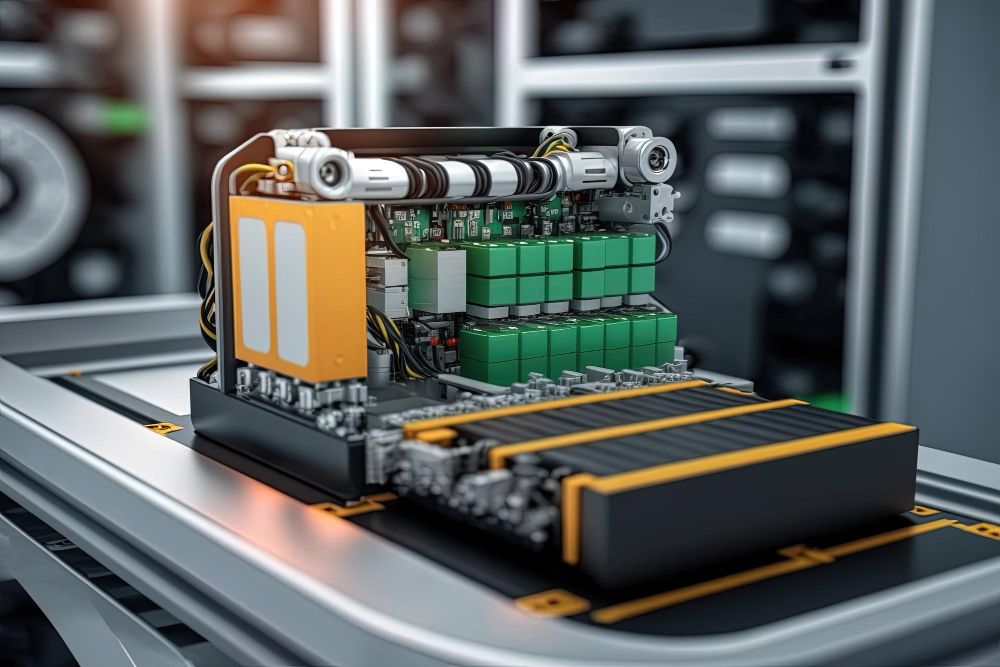
Traditional EV batteries typically organize individual cells into modules before combining those modules into a complete battery pack. Newer cell-to-pack architectures reduce some of these intermediate structures and integrate cells more directly into the pack.
Reducing unnecessary packaging can allow manufacturers to use available space more efficiently.
Structural battery concepts take this approach further by making the battery pack part of the vehicle’s structural design.
These developments can potentially improve pack-level energy density, reduce vehicle weight and lower manufacturing complexity.
This is important because improving EV range does not always require developing a completely new battery chemistry. Better engineering can allow manufacturers to extract more usable performance from existing cells.
AI and Smarter Battery Management Systems
Software is becoming just as important as chemistry in modern EV batteries.
The battery management system continuously monitors factors such as cell voltage, temperature, charging state and battery health. More sophisticated algorithms can use this information to optimize charging, thermal management and cell balancing.
Artificial intelligence and predictive analytics may further improve how manufacturers estimate battery degradation and identify abnormal behavior.
A smarter battery management system can adapt charging and cooling strategies according to battery condition and driving patterns rather than treating every battery pack identically.
This creates opportunities to improve battery lifespan and usable performance without physically increasing battery capacity.
Software could therefore become one of the less visible but most important areas of EV battery innovation.
Thermal Management Becomes Critical for Fast-Charging EVs
Temperature has a major influence on battery performance.
Excessive heat can accelerate battery degradation, while very low temperatures can reduce charging performance and available power.
As EV charging rates increase, effective thermal management becomes even more important.
Modern electric vehicles increasingly use sophisticated liquid cooling, battery preconditioning, heat pumps and software-controlled temperature management to keep battery cells within their preferred operating range.
Before arriving at a fast charger, some EVs can automatically precondition their batteries so the cells reach a temperature that supports higher charging speeds.
This interaction between battery chemistry, software and thermal engineering demonstrates why future charging improvements will depend on the complete vehicle system rather than the battery cell alone.
Battery Recycling Becomes Part of the EV Supply Chain
The sustainability of electric vehicles depends not only on how batteries are manufactured but also on what happens to them after automotive use.
EV batteries contain valuable materials that can potentially be recovered through recycling and returned to the battery supply chain.
As the number of electric vehicles on the road increases, battery recycling is expected to become increasingly important for reducing waste and recovering strategically important materials.
Recycling can also reduce some of the long-term dependence on newly mined resources.
Before recycling, some batteries may also have potential second-life applications.
An EV battery that no longer provides the performance required for a vehicle may still retain enough usable capacity for stationary energy storage. Such batteries could potentially support residential energy systems, commercial facilities or renewable energy installations before eventually being recycled.
Battery Passports Will Increase Transparency
EV battery innovation is increasingly extending beyond hardware.
Battery traceability is becoming an important issue, particularly as regulations place greater emphasis on lifecycle information and responsible supply chains.
Digital battery passports are intended to provide structured information about a battery’s composition, performance, origin, carbon footprint and lifecycle.
This could make it easier for manufacturers, regulators, recyclers and other stakeholders to understand where battery materials originate and how batteries should be handled later in their lives.
Greater transparency could also support battery reuse and recycling by making important technical information easier to access.
As the EV industry matures, battery performance and battery traceability are likely to become increasingly connected.
What EV Battery Innovations Mean for Drivers
For most consumers, the chemistry inside an electric vehicle matters less than the experience it delivers.
The advances taking place in EV battery technology in 2026 are ultimately aimed at making electric vehicles easier and more affordable to own.
Higher energy density can provide more driving range without adding excessive weight. Faster charging can make long-distance travel more convenient. Lower-cost chemistries can help manufacturers produce more affordable EVs, while improved battery management and thermal systems can extend battery lifespan.
At the same time, better recycling and supply-chain transparency can reduce the environmental impact associated with battery production.
The biggest improvements may therefore come from combining several innovations rather than relying on one breakthrough technology.
Will Solid-State Batteries Replace Lithium-Ion Batteries?
Not in the immediate future.
Despite their potential, solid-state batteries still face manufacturing, scalability and cost challenges. Meanwhile, conventional lithium-ion batteries continue to improve.
LFP technology is becoming more capable, silicon-enhanced anodes can increase energy density, battery-pack designs are becoming more efficient and charging performance continues to advance.
Sodium-ion technology is also creating another alternative for specific applications.
Instead of one technology replacing every other chemistry, EV manufacturers are likely to use different battery technologies according to vehicle price, performance requirements, range targets and regional supply chains.
The Future of EV Batteries Beyond 2026
The period between 2027 and 2030 could determine which emerging EV battery technologies achieve meaningful commercial scale.
Solid-state batteries will need to demonstrate that they can move from pilot manufacturing into reliable automotive production at competitive costs.
Sodium-ion batteries will need to establish the vehicle segments where their cost and supply-chain advantages outweigh their lower energy density.
Silicon-enhanced lithium-ion cells are likely to continue developing, while LFP and LMFP could further improve the economics of mass-market electric vehicles.
Charging technology will also evolve alongside battery chemistry. Higher-voltage architectures, improved thermal systems and better charging infrastructure could significantly reduce the practical difference between refueling a conventional vehicle and charging an EV.
Battery recycling will become increasingly important as larger numbers of electric vehicle batteries eventually reach the end of their first automotive life.
The EV Battery Revolution Is About More Than Range
EV battery technology in 2026 is not defined by one dramatic breakthrough.
Instead, innovation is occurring simultaneously across chemistry, cell design, battery packs, charging, software, thermal management and recycling.
Solid-state batteries remain an important future technology, but lithium-ion batteries continue to evolve rapidly. Sodium-ion batteries could open new opportunities for affordable electric mobility, while silicon-enhanced anodes, LFP and LMFP technologies are expanding the capabilities of today’s battery platforms.
For electric vehicle buyers, these developments could mean lower prices, shorter charging stops, longer battery life and increasingly practical driving ranges.
The next phase of electric mobility will therefore not simply be about building a battery that stores more energy. It will be about creating batteries that are more affordable, efficient, durable, safe and sustainable throughout their entire lifecycle.
As these technologies mature, battery innovation will remain one of the most important forces shaping the future of electric mobility.
Share this content:

Post Comment