Battery Performance on Mountain Roads: How Elevation, Weather, and Driving Conditions Affect Efficiency

Mountain roads provide some of the most scenic driving experiences, but they also create unique challenges for battery-powered vehicles. Unlike driving on flat highways, mountainous terrain requires the battery to deliver more power during steep climbs while adapting to changing weather, road gradients, and elevation levels. These conditions can influence driving range, charging efficiency, and overall battery performance.
Although mountain driving generally increases energy consumption, modern battery technology and regenerative braking systems help improve efficiency by recovering a portion of the energy during downhill travel. Understanding how batteries respond to mountain conditions allows drivers to plan trips more effectively and optimize vehicle performance.
Why Mountain Roads Affect Battery Performance
Mountain roads demand more energy because vehicles constantly encounter steep inclines, sharp turns, and frequent elevation changes. During uphill driving, the electric motor requires additional power to overcome gravity, leading to higher battery consumption than on level roads. In contrast, descending roads reduce the need for motor power and enable regenerative braking to recover some of the energy used during the climb.
Apart from elevation changes, mountain environments often expose vehicles to lower temperatures, stronger winds, and rougher road surfaces, all of which can influence battery efficiency and driving range.
How Uphill Driving Increases Battery Consumption
Driving uphill is one of the most energy-intensive situations for any battery-powered vehicle. As the slope becomes steeper, the battery must supply additional electricity to the motor to maintain speed and performance. Continuous climbing over long distances results in higher energy usage and a faster reduction in available driving range.
The amount of battery power consumed during uphill driving depends on several factors, including the steepness of the road, vehicle weight, driving speed, weather conditions, and road surface. Heavy loads or aggressive acceleration further increase energy demand, making efficient driving especially important on mountain routes.
The Benefits of Regenerative Braking on Downhill Roads
One of the advantages of mountain driving is the opportunity to recover energy during descents through regenerative braking. Instead of relying entirely on traditional friction brakes, the electric motor operates as a generator, converting part of the vehicle’s kinetic energy into electrical energy and sending it back to the battery.
While regenerative braking improves overall efficiency and helps reduce brake wear, it cannot recover all of the energy used during uphill driving. The amount of energy recovered depends on factors such as road gradient, battery charge level, vehicle speed, and battery temperature.
The Impact of Elevation on Driving Range
Elevation plays a significant role in determining how much energy a vehicle consumes during a journey. As the vehicle climbs to higher altitudes, more battery power is required to overcome gravity. This increased demand often causes the estimated driving range to decrease more quickly than expected.
During the return journey or extended downhill sections, regenerative braking can recover part of the consumed energy. However, the recovered energy is always less than the total energy used during the climb because some energy is lost through heat, rolling resistance, and aerodynamic drag.
How Weather Conditions Influence Battery Efficiency
Weather conditions in mountainous regions can change rapidly, making them an important factor in battery performance.
Cold temperatures temporarily reduce battery efficiency because the chemical reactions inside battery cells become slower. As a result, vehicles may experience reduced driving range, slower charging speeds, and increased energy consumption due to cabin heating.
Hot weather presents different challenges. During long uphill climbs, continuous high power demand can raise battery temperatures. Modern battery management systems monitor these temperatures and regulate performance to protect battery components from excessive heat.
Rain, snow, and strong winds can also increase energy consumption by creating additional rolling resistance and aerodynamic drag. These conditions often require drivers to use heating, lighting, or defrosting systems more frequently, placing additional demand on the battery.
Battery Temperature Management Systems
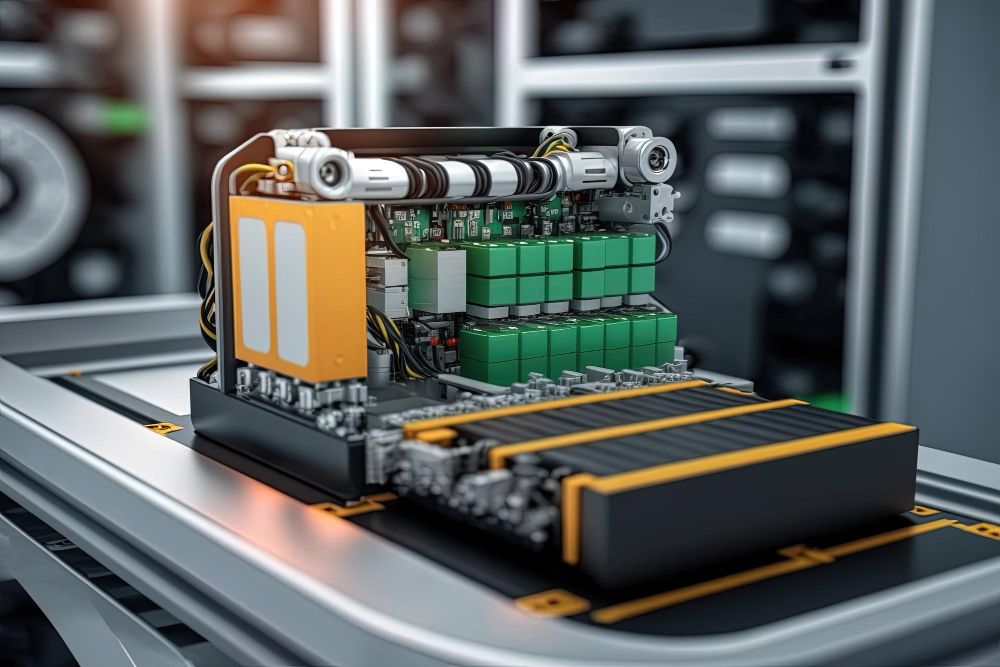
Modern battery-powered vehicles are equipped with advanced Battery Management Systems (BMS) that continuously monitor battery health and operating conditions. These systems help maintain the battery within an optimal temperature range by controlling cooling and heating functions when necessary.
Effective thermal management improves battery efficiency, supports faster charging under suitable conditions, and helps protect battery components from excessive wear caused by extreme temperatures.
Factors That Influence Battery Performance on Mountain Roads
Battery performance on mountainous routes depends on a combination of environmental and driving conditions rather than a single factor. Elevation changes, ambient temperature, vehicle weight, road gradient, driving speed, tire condition, wind resistance, and the use of climate control systems all contribute to overall energy consumption.
Understanding how these factors interact enables drivers to better estimate driving range and prepare for changing road conditions.
Charging Considerations for Mountain Travel
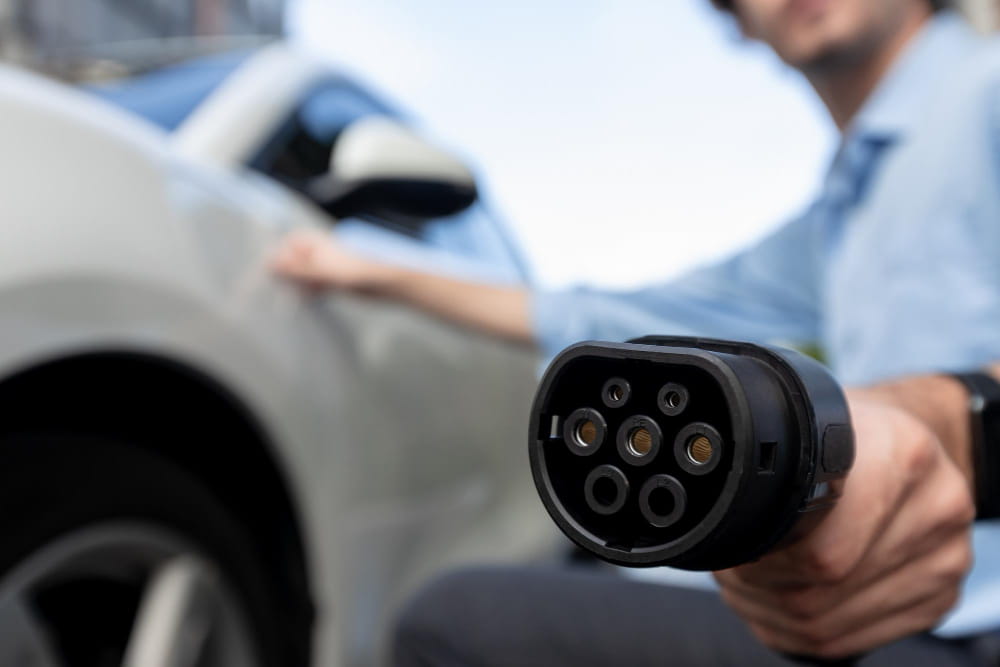
Planning charging stops becomes increasingly important when traveling through mountainous regions, particularly in remote areas where charging infrastructure may be limited.
Drivers should begin their journey with an adequate battery charge and identify available charging stations before starting long climbs. In colder climates, charging sessions may require additional time because batteries generally accept electrical energy more slowly until they reach their optimal operating temperature.
Proper route planning helps minimize range anxiety and reduces the likelihood of unexpected charging delays.
Best Driving Practices to Improve Battery Efficiency
Efficient driving techniques can significantly improve battery performance on mountain roads. Maintaining a steady speed, accelerating smoothly, and making effective use of regenerative braking help reduce unnecessary energy consumption. Keeping tires properly inflated also lowers rolling resistance, improving overall efficiency.
Drivers should avoid carrying unnecessary weight whenever possible and use climate control systems efficiently to reduce additional battery load. Monitoring battery level throughout the journey and selecting routes that account for elevation changes further supports efficient energy management.
Common Misconceptions About Battery Performance in Mountain Areas
Several misconceptions surround battery performance during mountain driving. One common belief is that mountain roads permanently damage batteries. In reality, modern battery systems are designed to operate safely under demanding driving conditions, and occasional mountain travel does not significantly affect long-term battery health.
Another misconception is that regenerative braking completely restores the energy consumed during climbing. Although regenerative braking improves efficiency by recovering some energy, it cannot fully compensate for the energy required to ascend steep slopes.
Similarly, while cold weather temporarily reduces battery efficiency, it does not permanently reduce battery capacity. Once the battery reaches its normal operating temperature, performance generally improves.
Maintaining Long-Term Battery Health
Frequent mountain driving does not necessarily shorten battery lifespan when vehicles are operated responsibly. Following recommended charging practices, avoiding repeated deep battery discharges, minimizing prolonged exposure to extreme temperatures, and keeping the vehicle properly maintained all contribute to preserving battery health over time.
Routine software updates and regular inspections also help ensure that battery management systems continue operating efficiently under varying driving conditions.
Future Innovations in Battery Technology
Battery technology continues to advance, with ongoing developments aimed at improving performance under demanding driving conditions. Higher energy-density batteries, faster charging capabilities, improved thermal management systems, and more intelligent energy management software are expected to enhance efficiency on mountain roads.
Future vehicles are also likely to incorporate advanced route-planning technologies capable of estimating energy consumption based on elevation profiles, weather conditions, and traffic patterns, allowing drivers to make more informed travel decisions.
Frequently Asked Questions (FAQs)
Does driving on mountain roads reduce battery life?
Mountain driving increases energy consumption but does not significantly reduce battery lifespan when proper driving and charging practices are followed.
Why does the battery drain faster during uphill driving?
Uphill driving requires additional power to overcome gravity, causing the battery to deliver more energy to the electric motor.
Can regenerative braking fully recharge the battery after a climb?
No. Regenerative braking only recovers a portion of the energy used during uphill driving.
Does cold weather permanently affect battery capacity?
No. Cold temperatures temporarily reduce battery efficiency, but normal performance generally returns as the battery warms to its optimal operating temperature.
Is route planning important for mountain trips?
Yes. Considering elevation changes, weather conditions, and charging availability helps improve trip efficiency and reduces the likelihood of unexpected charging interruptions.
Conclusion
Battery performance on mountain roads is influenced by a combination of elevation, weather, driving behavior, and vehicle operating conditions. Steep climbs require greater energy, while downhill descents provide opportunities to recover part of that energy through regenerative braking. Environmental factors such as temperature, wind, and road conditions further affect battery efficiency and driving range.
By understanding these influences and adopting efficient driving habits, drivers can optimize battery performance, improve energy efficiency, and support long-term battery health. As battery technology continues to evolve, future advancements are expected to make mountain driving more efficient, reliable, and convenient than ever before.
Share this content:
Post Comment