Lithium-Ion Battery Manufacturing Process: A Complete Guide
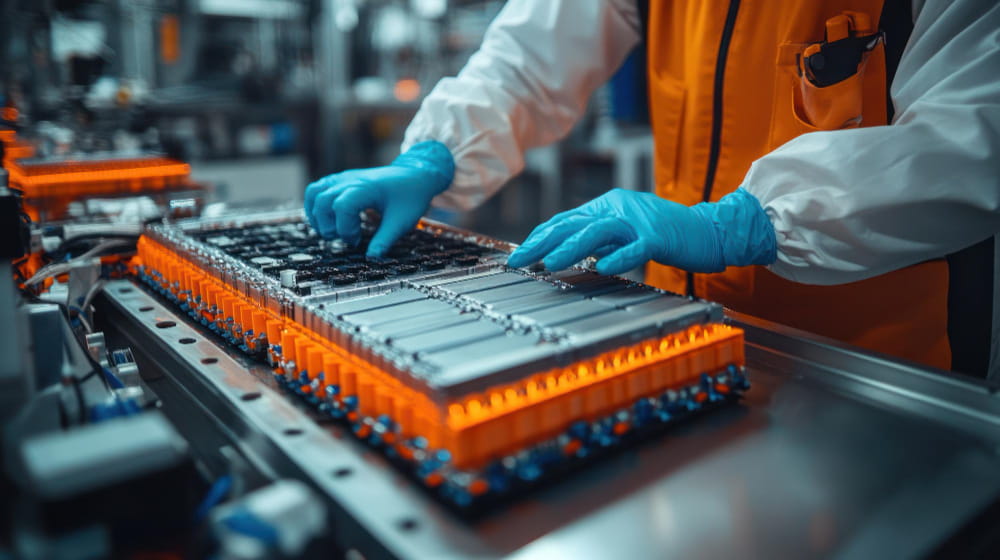
Lithium-ion batteries are the foundation of modern energy storage. They power smartphones, laptops, electric vehicles, renewable energy systems, and industrial equipment. Because of their high energy density and long cycle life, they have become the preferred choice for many applications. However, manufacturing these batteries requires precision, advanced technology, and strict quality control.
This guide explains the lithium-ion battery manufacturing process in a simple and easy-to-understand way.
What Is a Lithium-Ion Battery?
A lithium-ion battery is a rechargeable energy storage device. Simply put, it stores and releases energy through the movement of lithium ions between the cathode and anode. During charging, lithium ions move to the anode. Meanwhile, they return to the cathode during discharge and generate electricity.
As a result, lithium-ion batteries are lightweight, efficient, and long-lasting. Therefore, they are widely used in consumer electronics, electric vehicles, renewable energy storage, medical devices, and industrial machinery.
Raw Material Preparation
First, the manufacturing process begins with raw material preparation. High-quality materials are carefully selected before production starts. Typically, the cathode contains lithium-based compounds, while the anode is made from graphite or graphite mixed with silicon. In addition, conductive additives, polymer binders, aluminum foil, copper foil, separator films, and electrolytes are prepared.
Most importantly, material purity is critical. Even small impurities can reduce battery performance, safety, and lifespan.
Electrode Slurry Mixing
Next, manufacturers prepare the electrode slurry. Active materials are combined with conductive additives, binders, and solvents. Then, precision mixers create a smooth and uniform mixture.
As a result, the slurry provides even coating and reliable battery performance. Furthermore, manufacturers monitor viscosity and particle distribution throughout the process.
Electrode Coating
After mixing, the slurry is coated onto thin metal foils. Aluminum foil is used for the cathode, while copper foil is used for the anode. At this stage, precision coating machines apply a uniform layer across the foil.
Consequently, even coating thickness improves battery capacity, efficiency, and overall performance.
Electrode Drying
Once coating is complete, the electrodes move through controlled drying ovens. This process removes the remaining solvent from the coated material.
In addition, proper drying prevents cracks and uneven coatings. More importantly, it minimizes moisture contamination, which can reduce battery quality and safety.
Calendering
After drying, the electrodes pass through heavy rollers. This process is known as calendering.
During this stage, the electrode material becomes denser. As a result, particle contact improves, internal resistance decreases, and battery consistency increases.
Electrode Slitting
Next, the compressed electrodes are cut into precise widths. High-precision equipment performs this task with minimal material waste.
At the same time, accurate dimensions ensure smooth cell assembly. Additionally, clean edges improve manufacturing quality.
Cell Assembly
Following the slitting process, the cathode, separator, and anode are assembled into a battery cell. Depending on the battery design, the electrodes are either wound or stacked.
Meanwhile, this stage takes place in clean and dry environments. Because lithium-ion batteries are highly sensitive to moisture, humidity is carefully controlled.
Electrolyte Filling
After assembly, the battery cell is filled with electrolyte under controlled conditions. Typically, vacuum filling techniques ensure that the electrolyte spreads evenly throughout the cell.
Consequently, lithium ions can move efficiently between the electrodes during charging and discharging.
Cell Sealing
Once the electrolyte has been added, the battery cell is sealed. This step protects the battery from air, moisture, and contaminants. Furthermore, it prevents electrolyte leakage throughout the battery’s service life.
Although sealing methods vary depending on the battery format, every method aims to create a secure enclosure.
Formation and Aging
Next, the batteries undergo formation. During this stage, controlled charging and discharging cycles create a stable protective layer on the anode.
Afterward, the batteries enter an aging period. This process allows manufacturers to identify defects before the batteries reach final inspection.
Testing and Quality Inspection
Before approval, every battery undergoes detailed quality testing. Engineers measure capacity, voltage, internal resistance, and charging performance. In addition, safety tests and dimensional inspections are performed.
Furthermore, advanced inspection systems can detect internal defects. Only after passing every quality check do the batteries move to the next stage.
Battery Pack Assembly
Finally, individual battery cells are assembled into modules and battery packs. Cells with similar performance characteristics are matched together. Next, a battery management system is integrated into the pack. Thermal management components and protective enclosures are also installed.
Before shipment, the completed battery pack undergoes final testing to ensure reliable performance.
Importance of Clean Manufacturing
Throughout the manufacturing process, clean production environments are essential. Dust, moisture, and contaminants can reduce battery performance and create safety risks.
Therefore, manufacturers use cleanrooms and low-humidity environments. As a result, product quality remains consistent throughout production.
Future of Lithium-Ion Battery Manufacturing
Looking ahead, battery manufacturing will continue to evolve. Automation and artificial intelligence are improving production efficiency. Moreover, new electrode materials are increasing energy density. Sustainable manufacturing methods are also becoming more common.
At the same time, researchers are developing next-generation battery technologies. Ultimately, these innovations aim to deliver faster charging, longer battery life, improved safety, and greater energy storage.
Conclusion
Overall, the lithium-ion battery manufacturing process combines advanced materials, precision engineering, and strict quality control. From raw material preparation to final testing, every production stage contributes to battery performance, safety, and durability. As demand for clean energy continues to grow, manufacturing technologies will also improve. Consequently, future lithium-ion batteries are expected to become safer, more efficient, and longer-lasting.
Share this content:



Post Comment