EV Supply Chain in India: Opportunities for Component Manufacturers
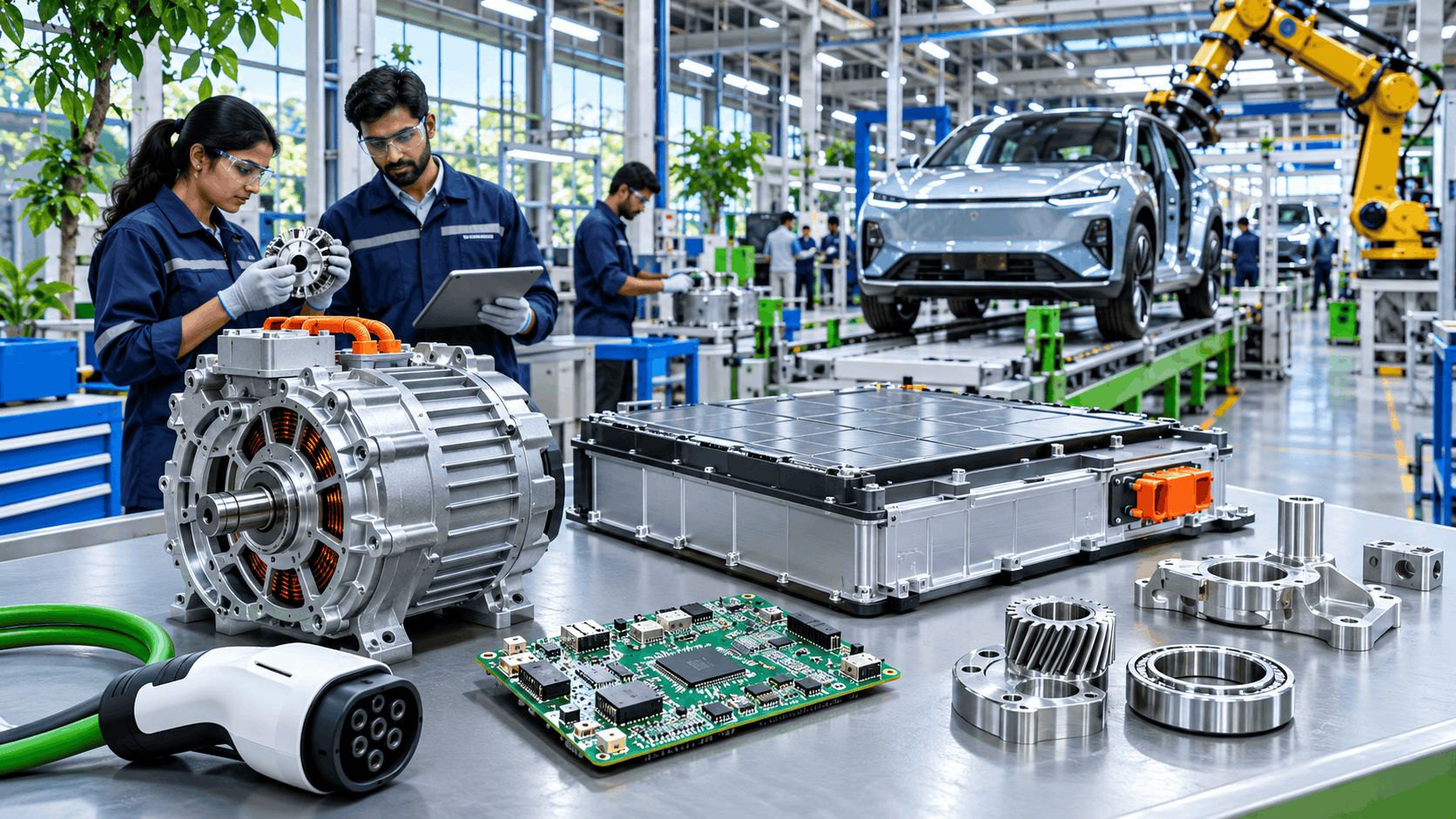
India’s electric vehicle industry is creating opportunities far beyond vehicle assembly. As electric two-wheelers, three-wheelers, cars, buses, and commercial vehicles become more visible on Indian roads, manufacturers are looking for reliable suppliers who can deliver high-quality components at competitive prices.
From battery enclosures and electric motors to wiring harnesses, charging connectors, and thermal management systems, the EV supply chain offers opportunities for both established automotive suppliers and businesses entering the mobility sector for the first time.
For Indian component manufacturers, the shift towards electric mobility is an opportunity to develop new capabilities, work with emerging vehicle brands, and contribute to a stronger domestic manufacturing ecosystem.
Understanding the EV Supply Chain in India
The electric vehicle supply chain includes the businesses involved in designing, manufacturing, assembling, testing, and distributing the components needed to produce and operate an EV.
While an electric vehicle shares some parts with a conventional vehicle, its core powertrain is different. An internal combustion engine and fuel system are replaced by a battery pack, electric motor, power electronics, and associated control systems. EVs also require charging equipment, specialised electrical components, and software to monitor vehicle performance.
This shift is changing purchasing requirements across the automotive industry. Vehicle manufacturers need suppliers with expertise in electronics, electrical systems, lightweight materials, precision engineering, and thermal management, alongside traditional manufacturing capabilities.
The opportunity is not limited to large manufacturers. Small and medium enterprises can also participate by supplying individual parts, offering specialised processes, or supporting testing and assembly.
Why India’s EV Supply Chain Is Expanding
India’s transition towards electric mobility is being supported by several connected developments. Vehicle manufacturers are introducing new electric models, fleet operators are exploring electrification, and businesses are investing in charging infrastructure and battery technologies.
Government initiatives have also supported the development of the EV ecosystem. The PM E-DRIVE scheme aims to encourage EV adoption, develop charging infrastructure, and strengthen domestic manufacturing. Separately, the Production Linked Incentive scheme for the automobile and auto component industry is designed to promote manufacturing of advanced automotive technology products.
For component manufacturers, these developments can create demand for locally sourced products and engineering services. However, opportunities differ across vehicle categories, and manufacturers should assess each customer’s requirements before investing in new capacity.
Battery Components and Pack Manufacturing
The battery pack is one of the most important systems in an electric vehicle. It stores energy, influences driving range, and plays a major role in vehicle performance and safety.
Although battery cell manufacturing involves significant technology and investment requirements, the wider battery supply chain offers opportunities at different levels. Manufacturers can explore products such as battery enclosures, metal housings, electrical connectors, busbars, cooling components, insulation materials, and structural parts.
Businesses with electronics and software capabilities can also explore battery management systems, which monitor parameters such as temperature, voltage, and battery performance. Testing, assembly, inspection, and quality-control services are additional areas where specialised suppliers can participate.
For manufacturers already working with sheet metal, aluminium, precision fabrication, plastics, or electrical components, battery pack applications may provide a route into the EV industry.
Electric Motors and Powertrain Components
The electric motor converts electrical energy into the mechanical power that drives an EV. As manufacturers develop electric two-wheelers, three-wheelers, passenger cars, and commercial vehicles, they need motors suited to different performance and cost requirements.
This creates opportunities for suppliers of motor housings, shafts, bearings, gears, laminations, winding materials, and precision-machined parts. Manufacturers with capabilities in casting, forging, machining, and metal processing can explore how their existing production facilities could support electric powertrain applications.
Component suppliers should pay close attention to consistency, durability, weight, and operating performance. Working with customers during the design and prototype stages can help manufacturers develop parts suited to specific vehicle platforms.
Power Electronics and Electrical Systems
Power electronics control the flow of electricity between the battery, motor, and other vehicle systems. These components are essential to the efficiency and operation of an electric vehicle.
The sector offers opportunities for manufacturers of inverters, converters, controllers, sensors, printed circuit boards, and electronic assemblies. Supporting components such as connectors, switches, fuses, relays, and protective devices are also needed throughout the vehicle.
Wiring harnesses are another important area. EVs use electrical systems that require carefully designed wiring, insulation, and connections. Suppliers with experience in cable manufacturing and electrical assemblies can explore opportunities to develop products that meet the requirements of EV manufacturers and their system suppliers.
Because these components are connected to vehicle performance and safety, manufacturers need strong testing processes and clear quality documentation.
Charging Infrastructure and Related Components
The growth of electric mobility also depends on convenient and reliable charging. As charging infrastructure develops across homes, workplaces, commercial locations, fleet depots, and public spaces, it creates opportunities for a wider group of manufacturers.
Businesses can explore the production of charging connectors, cables, enclosures, circuit protection equipment, power distribution components, and charger assemblies. Companies offering software, monitoring systems, installation equipment, and maintenance services may also find opportunities in the charging ecosystem.
For electrical equipment manufacturers, this segment can provide a way to participate in the EV market beyond supplying vehicle components. Products must be designed for their intended charging application and comply with the relevant technical and safety requirements.
Thermal Management and Lightweight Materials
Temperature management is important for the performance and durability of EV batteries, motors, and electronic systems. As a result, vehicle manufacturers need components that can help manage heat under different operating conditions.
Suppliers can explore opportunities in cooling plates, pumps, pipes, heat exchangers, fans, and thermal insulation materials. Manufacturers with experience in automotive cooling, HVAC systems, plastics, or metal fabrication may be able to adapt their capabilities for EV applications.
Lightweight components are another area of interest. Reducing vehicle weight can support efficiency, but manufacturers must balance weight reduction with strength, durability, safety, and cost. This creates opportunities for businesses working with aluminium, engineered plastics, composites, and advanced fabrication processes.
Opportunities for Indian MSMEs
India’s micro, small, and medium enterprises have an important role to play in the EV supply chain. Many already possess experience in precision machining, casting, moulding, electrical assemblies, and industrial fabrication.
An MSME does not need to manufacture a complete EV system to become part of the industry. A business may begin by supplying a specialised component to a larger supplier, providing a manufacturing process, or supporting prototypes and small production runs.
For example, a sheet-metal manufacturer could explore battery enclosures, while an electrical components company could assess opportunities in connectors or wiring assemblies. A precision engineering business could work on motor housings, brackets, or other parts required by EV equipment suppliers.
The first step is to understand where existing capabilities match customer demand. Manufacturers can then identify the equipment, skills, testing facilities, and process improvements needed to serve that market.
Challenges Component Manufacturers Should Consider
The EV supply chain also brings challenges. Technology continues to evolve, and customer requirements can vary across vehicle types and product applications. Manufacturers may need to invest in new equipment, train employees, or develop partnerships to access technical expertise.
Cost competitiveness is another consideration. A supplier must be able to meet quality expectations while maintaining reliable delivery and commercially viable production. Dependence on imported materials or specialised components can also affect costs and lead times.
Quality assurance and traceability are particularly important. Before approaching EV customers, manufacturers should understand the applicable product requirements, testing procedures, and documentation expected for their specific component. These requirements can differ depending on the product and its intended use.
How Manufacturers Can Enter the EV Supply Chain
A practical starting point is to identify one or two EV components that align with a company’s existing skills and manufacturing capacity. Rather than entering a new segment without a clear customer requirement, businesses can study the needs of vehicle manufacturers, battery pack assemblers, charging equipment companies, and established component suppliers.
The next step is to assess technical readiness. This may include reviewing material requirements, production tolerances, testing capabilities, quality systems, and the ability to scale. Developing a prototype or sample can help a potential customer evaluate the product and provide feedback.
Industry exhibitions, trade associations, and B2B meetings can also help manufacturers understand market requirements and connect with potential buyers, technology providers, and partners. These conversations can reveal where local suppliers can solve practical sourcing or production challenges.
Manufacturers interested in government support should check the latest official scheme guidelines and eligibility conditions before making an investment decision. Participation or benefits should not be assumed for every supplier.
The Future of India’s EV Manufacturing Ecosystem
The future of India’s electric vehicle industry will depend on more than the number of vehicles manufactured. It will also depend on the strength of the supplier network behind them.
Businesses that invest in product quality, technical skills, customer relationships, and continuous improvement can position themselves to participate in this developing market. At the same time, collaboration between vehicle manufacturers, component suppliers, technology companies, and research institutions can support the development of more competitive products.
For Indian manufacturers, the EV transition presents an opportunity to apply established engineering strengths to a changing automotive industry and build capabilities for the future of mobility.
Conclusion
The EV supply chain in India offers opportunities across batteries, electric motors, power electronics, charging infrastructure, thermal management, and lightweight components. Both established automotive suppliers and MSMEs can find potential entry points by matching their capabilities with the needs of EV manufacturers and their supply partners.
As the industry develops, manufacturers that focus on dependable quality, innovation, and long-term collaboration will be better placed to explore opportunities in India’s electric mobility ecosystem.
Share this content:

Post Comment