EV Battery Technology in 2026: Latest Innovations Shaping Electric Mobility
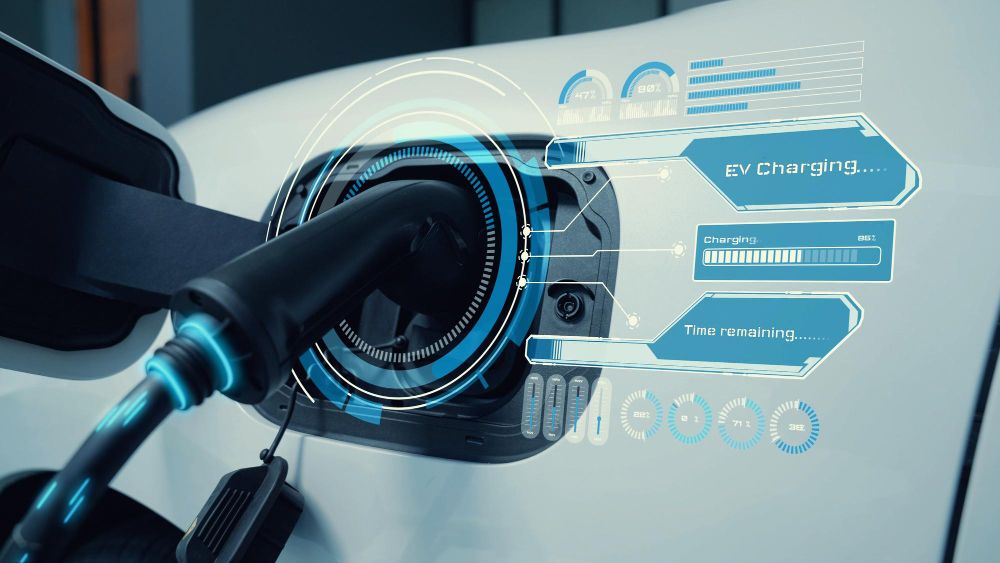
Electric vehicle technology is advancing rapidly, but some of the biggest changes happening in 2026 are not taking place in motors, infotainment systems or autonomous-driving software. They are happening inside the battery pack.
EV battery technology in 2026 is being reshaped by faster charging, new battery chemistries, higher energy density, improved thermal management and more efficient battery-pack designs. At the same time, manufacturers are looking for ways to lower battery costs, reduce dependence on critical minerals and make electric vehicles safer and more practical for everyday users.
The scale of the industry shows how important these developments have become. According to the International Energy Agency, global EV battery deployment reached around 1.2 TWh in 2025, increasing almost 30% compared with the previous year.
So, what technologies are driving the next phase of electric mobility?
Solid-State Batteries Are Moving Closer to Real-World EVs
Solid-state batteries remain one of the most anticipated developments in electric mobility.
Traditional lithium-ion batteries use liquid electrolytes to transport ions between the cathode and anode. Solid-state batteries replace this liquid component with a solid electrolyte.
The potential advantages are significant. Solid-state designs could offer higher energy density, lower battery weight, improved safety and potentially faster charging.
More importantly, the technology is beginning to move beyond laboratory prototypes.
In June 2026, Stellantis and Factorial announced that Factorial’s solid-state battery cells had been integrated into a Dodge Charger Daytona development vehicle, with road testing underway to evaluate performance, reliability and safety in real driving conditions. Earlier testing of the cells demonstrated an energy density of around 375 Wh/kg and charging from 15% to 90% in 18 minutes.
Mercedes-Benz has also been testing lithium-metal solid-state technology with Factorial. In 2025, a modified Mercedes-Benz EQS equipped with a solid-state battery completed a 1,205 km journey on a single charge, although this remains a development vehicle rather than a production EV.
QuantumScape is progressing on the manufacturing side as well. In February 2026, the company inaugurated its Eagle Line pilot-production system for solid-state lithium-metal cells, designed to support customer testing and future industrialisation.
However, mass-market solid-state EVs are still not commonplace in 2026. Manufacturing cost, durability, production yield and large-scale manufacturing remain significant hurdles. Toyota, for example, continues to target approximately 2027-2028 for initial commercialisation of its all-solid-state battery technology.
The important change in 2026 is therefore not that solid-state batteries have replaced lithium-ion batteries, but that the technology is increasingly being tested at vehicle and pilot-production scale.
Ultra-Fast Charging Is Becoming Just as Important as Range
For many years, EV manufacturers competed primarily on driving range.
In 2026, charging speed is becoming equally important.
Instead of simply fitting larger batteries into vehicles, manufacturers are developing cells capable of accepting much higher charging power without excessive heat or rapid degradation.
CATL’s third-generation Shenxing battery illustrates how aggressive this development has become. CATL says its latest system can charge from 10% to 80% state of charge in approximately 3 minutes and 44 seconds under specified conditions, while retaining more than 90% capacity after 1,000 full cycles in its testing.
Such headline figures should always be understood alongside charger capability, vehicle architecture, battery temperature and real-world conditions. Nevertheless, the broader trend is clear: EV charging is moving closer to the convenience drivers associate with refuelling conventional vehicles.
The next challenge will be infrastructure. Batteries capable of extremely high charging rates provide limited benefits without charging stations, electrical grids and vehicle architectures capable of supplying that power.
Sodium-Ion Batteries Are Entering the Scale-Up Phase
Lithium-ion batteries still dominate electric mobility, but sodium-ion technology is emerging as one of the most interesting alternatives.
Sodium is abundant and widely available, which could help manufacturers reduce dependence on lithium and improve supply-chain resilience.
The International Energy Agency describes sodium-ion batteries as entering the scale-up phase. Current sodium-ion batteries generally have lower energy density than leading lithium-ion technologies, making them less suitable for long-range premium EVs. However, they can perform particularly well at low temperatures and could become attractive for smaller EVs, commercial vehicles, two- and three-wheelers and energy-storage applications.
CATL’s Naxtra sodium-ion battery is one of the important projects to watch. The company says it has reached GWh-level industrialisation and plans full-scale mass production by the end of 2026.
Rather than completely replacing lithium batteries, sodium-ion technology could become another option within a much more diversified battery market.
Future EV manufacturers may choose different chemistries depending on the vehicle’s price, climate, range requirement and intended use.
LFP Batteries Continue to Reshape Affordable Electric Cars
While futuristic battery technologies receive plenty of attention, one of the biggest changes in the EV market is being driven by an already-established chemistry: lithium iron phosphate, or LFP.
LFP batteries generally cost less and avoid nickel and cobalt. They are also known for good cycle life and thermal stability.
Their main historical disadvantage has been lower energy density compared with nickel-rich chemistries such as NMC.
Improved cell chemistry and more efficient battery-pack construction are gradually reducing that disadvantage.
According to the IEA, LFP represented more than 55% of globally deployed EV batteries in 2025, up from nearly half in 2024.
That makes LFP particularly important for the industry’s effort to produce more affordable mass-market electric vehicles.
Instead of every EV requiring the chemistry with the maximum possible range, manufacturers are increasingly optimising batteries according to use case. An affordable city EV, for example, may benefit more from low cost, durability and safety than from an extremely high energy-density battery.
Silicon Anodes Could Put More Energy Into the Same Battery
Another important innovation is happening on the anode side of lithium-ion batteries.
Most conventional lithium-ion batteries rely heavily on graphite in their anodes. Silicon can theoretically store considerably more lithium than graphite, making it attractive for increasing battery capacity.
The problem is expansion.
Silicon expands significantly during charging and contracts during discharge. Repeated expansion can damage the battery structure and reduce its useful life.
Battery-material companies are developing silicon-carbon structures designed to control this behaviour.
Commercialisation is now accelerating. In March 2026, Group14 announced that an EV-scale facility in South Korea had begun ramping production of its SCC55 silicon battery material. The plant is designed for approximately 10 GWh of annual battery capacity once ramped.
Sila is pursuing a similar strategy with its Titan Silicon material and has been scaling automotive-grade production in Washington. Panasonic Energy has also identified greater silicon use as part of its roadmap for increasing lithium-ion battery energy density.
Silicon therefore represents an important reminder that lithium-ion batteries themselves are far from finished evolving.
Battery Packs Are Becoming Part of the Vehicle Structure
Battery innovation is not limited to chemistry.
Automakers and battery manufacturers are also changing how cells are packaged inside vehicles.
Traditional EV batteries normally contain cells assembled into modules, which are then installed inside a larger battery pack.
Cell-to-pack designs remove some of those intermediate structures. Cell-to-chassis approaches go further by integrating battery components more directly into the vehicle’s structure.
The result can be fewer components, better use of space and improved pack-level energy density.
The IEA notes that innovations including cell-to-pack and cell-to-chassis construction have played an important role in improving the capabilities of prismatic and LFP battery systems.
This means future improvements in driving range may come not only from storing more energy inside each cell, but also from designing the entire vehicle more efficiently around the battery.
Smarter Thermal Management and Battery Software
As batteries become more powerful and charging speeds increase, temperature control becomes increasingly important.
Excessive heat can accelerate battery degradation and, in extreme situations, contribute to safety problems. Very cold temperatures can also reduce charging speed and available range.
Modern EV battery systems increasingly combine sophisticated cooling systems, battery pre-conditioning and software that continuously monitors battery behaviour.
Battery management systems can track parameters such as temperature, voltage, charging patterns and cell health to optimise charging and protect battery longevity.
This software layer will become increasingly important as automakers try to balance several competing goals: faster charging, longer battery life, better performance and improved safety.
Safety Is Becoming a Major Battery Innovation Area
Range and charging speed receive most of the headlines, but battery safety is becoming another key competitive area.
Manufacturers are developing stronger battery enclosures, improved cooling, better electrical isolation and systems designed to prevent thermal events from spreading from one cell to another.
New battery regulations and testing requirements are also encouraging manufacturers to design packs capable of surviving severe impact, thermal and charging conditions.
As EV adoption expands beyond early adopters to mainstream consumers, safety performance will become just as important to customer confidence as maximum driving range.
Recycling and Battery Sustainability Are Becoming Part of Battery Design
The battery industry’s challenge is no longer simply producing more batteries.
It also needs to determine what happens to those batteries and their materials over several decades.
Recycling can recover valuable materials including lithium, nickel, cobalt and copper, reducing the requirement for newly mined resources.
As larger numbers of first-generation EV batteries eventually reach the end of their automotive lives, recycling capacity is expected to become an increasingly important part of the EV supply chain.
Battery design may therefore become more circular, with manufacturers considering material recovery, second-life applications and recycling efficiency alongside performance.
What Do These EV Battery Innovations Mean for Drivers?
For EV buyers, the combined effect of these technologies may ultimately matter more than any single battery breakthrough.
Drivers can expect EV development to focus on:
- shorter charging stops;
- more affordable battery packs;
- better performance in hot and cold climates;
- longer battery life;
- improved safety;
- lighter vehicles;
- more practical driving ranges; and
- a wider choice of EVs designed for different budgets and use cases.
The most important development may therefore be battery diversification.
There is unlikely to be one battery chemistry that powers every electric vehicle.
Affordable city cars may increasingly favour LFP or sodium-ion technology. Long-range and premium vehicles may continue using high-energy nickel-based lithium-ion batteries. Silicon-rich anodes could improve existing lithium-ion designs, while solid-state batteries could eventually open another generation of high-performance electric vehicles.
The Future of EV Batteries Beyond 2026
The EV battery race is shifting from a search for one revolutionary technology toward a combination of incremental and breakthrough innovations.
Solid-state batteries are moving into road tests and pilot production. Sodium-ion technology is approaching larger-scale manufacturing. Silicon anode production is expanding. LFP continues to improve. Charging speeds are increasing, and manufacturers are finding smarter ways to integrate batteries directly into vehicle structures.
The result could be electric vehicles that are cheaper, lighter, safer and faster to recharge.
Not every technology making headlines in 2026 will reach mass production immediately. Battery manufacturing is extremely difficult to scale, and laboratory performance does not automatically translate into affordable production vehicles.
But the direction is clear.
The next generation of electric mobility will not be defined simply by bigger batteries. It will be shaped by smarter batteries — using the right chemistry, architecture and software for each vehicle.
Frequently Asked Questions
What is the latest EV battery technology in 2026?
Some of the most important EV battery developments in 2026 include solid-state battery road testing, sodium-ion battery scale-up, silicon-carbon anodes, advanced LFP batteries, ultra-fast charging and cell-to-pack or cell-to-chassis battery architecture.
Are solid-state batteries available in EVs in 2026?
Solid-state batteries are being tested in development vehicles, but they are not yet widely available in mass-market production EVs. Several automakers and battery companies are working toward commercialisation later in the decade.
Are sodium-ion batteries better than lithium-ion batteries?
Not in every application. Sodium-ion batteries generally have lower energy density, but they can offer advantages including abundant raw materials and strong low-temperature performance. They may be particularly useful for lower-range EVs and energy storage.
Why are LFP batteries becoming popular?
LFP batteries typically offer lower material costs, good durability and strong thermal stability while avoiding nickel and cobalt. Improvements in pack design have also made their lower energy density less limiting for many EV applications.
Will EV batteries charge in five minutes?
Battery technologies capable of extremely fast charging are already being demonstrated, but real-world charging times depend on the vehicle, battery temperature, charger output and charging infrastructure. Wider deployment will therefore require both improved batteries and higher-power charging networks.
Conclusion
EV battery technology in 2026 is entering a new phase where improvements are no longer focused only on increasing driving range. Manufacturers are now competing on charging speed, battery cost, safety, durability, energy density and sustainability.
Technologies such as solid-state batteries, sodium-ion chemistry, silicon-based anodes, advanced LFP cells and cell-to-pack architectures are gradually changing how electric vehicles are designed and manufactured. At the same time, smarter battery management systems and improved thermal-control technologies are helping EVs deliver better performance and longer battery life.
Many of these innovations are still developing, and some will take several years to reach large-scale commercial adoption. However, their progress in 2026 shows that the EV industry is moving toward batteries that can charge faster, last longer, cost less and use resources more efficiently.
As battery technology continues to evolve, electric vehicles are likely to become more practical and accessible for a much wider range of drivers. Ultimately, the future of electric mobility will depend not on one breakthrough battery, but on the combination of better chemistry, smarter engineering, improved software and sustainable manufacturing.
Share this content:

Post Comment