Top Battery & BMS Technologies at EV India Expo 2026
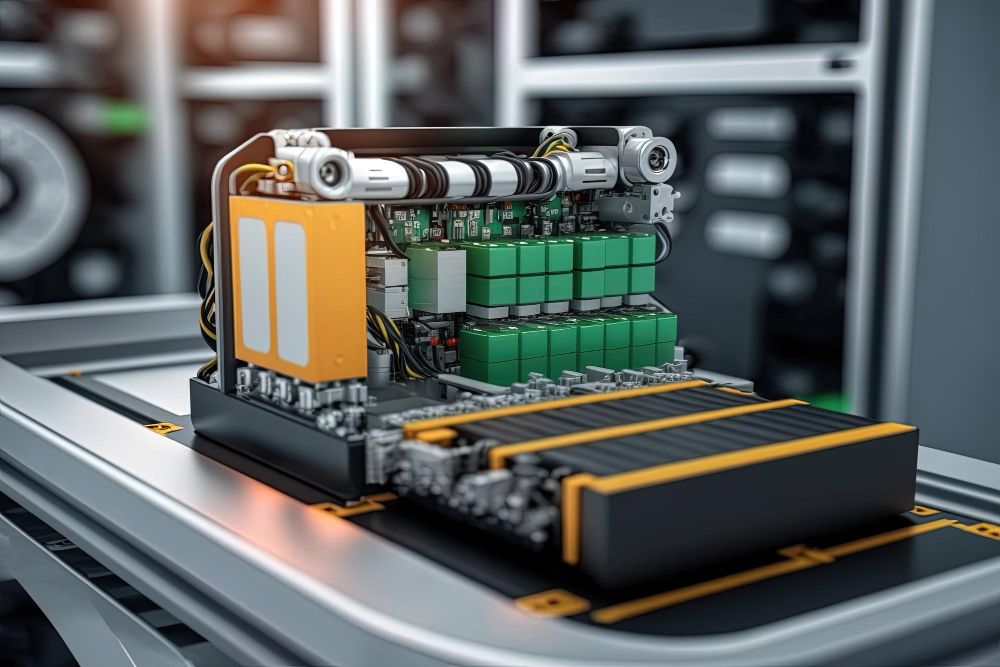
Electric vehicles are evolving rapidly, and much of that transformation is happening inside the battery pack. At EV India Expo 2026, battery technology, Battery Management Systems (BMS), energy storage, charging solutions and advanced EV components were among the major areas highlighting the changing future of electric mobility.
From smarter battery monitoring and improved thermal management to new cell chemistries and faster charging capabilities, the latest developments demonstrate how manufacturers are working to make electric vehicles safer, more efficient, longer-lasting and more affordable.
Here are some of the key battery and BMS technologies shaping the next generation of electric mobility.
1. Advanced Lithium-Ion and LFP Battery Technology
Lithium-ion batteries continue to power a large share of today’s electric vehicles, but manufacturers are constantly improving battery chemistry, cell design and pack architecture.
Lithium Iron Phosphate, commonly known as LFP, has become particularly important because of its durability, thermal stability and potential cost advantages. These characteristics make LFP technology attractive for electric two-wheelers, three-wheelers, passenger vehicles, buses and commercial EV applications.
The next phase of EV battery development is increasingly focused not only on increasing energy density but also on balancing affordability, charging speed, safety and battery life.
2. Smart Battery Management Systems
The Battery Management System is often described as the intelligence behind an EV battery pack.
Modern BMS technology continuously monitors critical battery parameters such as:
- Cell voltage
- Current
- Battery temperature
- State of Charge (SoC)
- State of Health (SoH)
- Charging and discharging behaviour
- Cell imbalance
Using this information, the BMS can help protect the battery from overcharging, excessive discharge, overheating and other conditions that could affect performance or safety.
As electric vehicles become increasingly connected, smart BMS solutions are also becoming more sophisticated.
3. AI-Powered and Predictive BMS
Artificial intelligence and advanced analytics are creating a new generation of intelligent battery management systems.
Instead of simply responding to battery conditions, predictive BMS platforms can analyse operating data to identify unusual behaviour before it develops into a larger problem.
AI-supported battery management can potentially improve:
- Battery health estimation
- Range prediction
- Charging optimisation
- Thermal control
- Predictive maintenance
- Fault detection
- Fleet battery monitoring
For commercial EV fleets, intelligent battery monitoring can be particularly valuable because battery performance directly influences vehicle uptime and operating costs.
4. Advanced Battery Thermal Management
Managing battery temperature has become one of the most important areas of EV engineering.
High temperatures can accelerate battery degradation, while extreme operating conditions may affect charging speed, performance and safety.
New-generation battery thermal management systems are therefore moving beyond basic air cooling toward technologies such as liquid cooling, integrated cooling circuits, advanced sensors, phase-change materials and intelligent temperature-control algorithms.
Increasing integration between thermal management systems and the BMS allows the vehicle to continuously monitor battery temperatures and adjust cooling according to real-time operating conditions.
5. Faster-Charging Battery Technology
Charging time remains one of the biggest considerations for EV buyers.
Battery manufacturers are developing cells and battery packs capable of accepting higher charging rates while managing heat and degradation.
However, fast charging is not simply about installing a more powerful charger. Battery chemistry, thermal management, charging algorithms and BMS software must work together to safely handle higher power levels.
The combination of intelligent BMS technology and advanced cooling systems will therefore play an important role in the expansion of fast and ultra-fast EV charging.
6. Solid-State Batteries
Solid-state batteries remain one of the most closely watched technologies in the global electric vehicle industry.
Unlike conventional lithium-ion batteries that typically use liquid electrolytes, solid-state batteries use solid electrolyte materials.
The technology has attracted considerable interest because of its potential to improve battery safety and energy density while enabling new battery architectures.
Although large-scale commercial deployment continues to develop, solid-state technology remains an important part of the longer-term EV battery innovation landscape.
7. Sodium-Ion Batteries
Another emerging technology gaining attention is the sodium-ion battery.
Sodium-ion batteries could become particularly relevant for applications where affordability, material availability and safety are more important than achieving the maximum possible driving range.
Potential applications include electric two-wheelers, three-wheelers, short-range vehicles, commercial mobility and stationary energy storage.
As India’s electric mobility and renewable-energy ecosystems expand, alternative battery chemistries such as sodium-ion could complement established lithium-ion technologies.
8. Smarter Battery Pack Design
Innovation is also happening at the battery-pack level.
Manufacturers are exploring better cell integration, lightweight materials, improved structural designs and more efficient packaging to increase the amount of usable energy available within the same physical space.
Better battery-pack design can help manufacturers reduce weight, simplify components and potentially improve vehicle range and efficiency.
For Indian electric vehicles, where cost and efficiency are critical, improvements in pack engineering can be as important as developments in battery chemistry itself.
9. Battery Swapping Technology
Battery swapping continues to be an important area of India’s EV ecosystem, particularly for electric two-wheelers, three-wheelers, delivery vehicles and commercial fleets.
Instead of waiting for a battery to recharge, users can replace a depleted battery with a charged unit.
Advanced BMS technology is essential to these systems because operators need reliable information about the charge level, health, temperature and lifecycle of every battery circulating within the swapping network.
Smart monitoring can help battery-swapping operators manage hundreds or thousands of battery packs more efficiently.
10. Battery Safety and Real-Time Monitoring
Safety remains at the centre of battery innovation.
Modern BMS solutions use multiple sensors and protection mechanisms to detect abnormal voltage, excessive current, temperature changes and cell-level inconsistencies.
Combined with sophisticated thermal management and diagnostic software, these systems can help identify potential problems earlier.
Improved battery safety technology is particularly important in India, where electric vehicles can operate under high ambient temperatures, heavy traffic, demanding commercial duty cycles and varied road conditions.
11. Battery Recycling and the Circular EV Economy
EV battery innovation does not end when a battery leaves a vehicle.
Battery recycling and second-life applications are becoming increasingly important as the number of electric vehicles grows.
Recycling technologies can help recover valuable battery materials, while batteries that no longer meet automotive performance requirements may still have potential applications in stationary energy storage.
Building a strong recycling ecosystem will therefore be an important part of making India’s EV transition more sustainable.
What These Technologies Mean for India’s EV Industry
The battery is one of the most important factors determining the price, range, charging speed, safety and lifetime of an electric vehicle.
Advances in battery chemistry alone will not define the future of EVs. The industry is increasingly moving toward integrated battery ecosystems where cells, battery packs, BMS software, thermal management, charging infrastructure and data analytics work together.
For Indian EV manufacturers, fleet operators and technology companies, this creates significant opportunities across battery manufacturing, electronics, software, charging, recycling and energy storage.
The Future of EV Battery Technology
The future of EV batteries will likely involve multiple technologies rather than a single winning chemistry.
LFP batteries can continue serving applications where safety, durability and cost are priorities. Higher-energy lithium-ion chemistries can support applications requiring greater range. Sodium-ion technology could open new opportunities in cost-sensitive mobility and energy storage, while solid-state batteries remain an important area of future development.
At the same time, increasingly intelligent BMS platforms will connect these technologies through real-time monitoring, predictive analytics, advanced safety controls and smarter charging.
Conclusion
EV India Expo 2026 highlighted how batteries and Battery Management Systems are becoming central to the future of electric mobility.
From advanced lithium-ion and LFP batteries to smart BMS platforms, AI-based monitoring, thermal management, fast charging, sodium-ion technology, battery swapping and recycling, innovation is taking place across the complete battery ecosystem.
As electric mobility expands across India, the companies capable of delivering safer batteries, longer life, faster charging, intelligent monitoring and competitive costs will play an increasingly important role in the country’s transition toward sustainable transportation.
The next generation of electric vehicles will not simply depend on bigger batteries—it will depend on smarter, safer and more efficiently managed energy systems.
Share this content:

Post Comment