Top Companies Investing in Indian EV Manufacturing in 2026
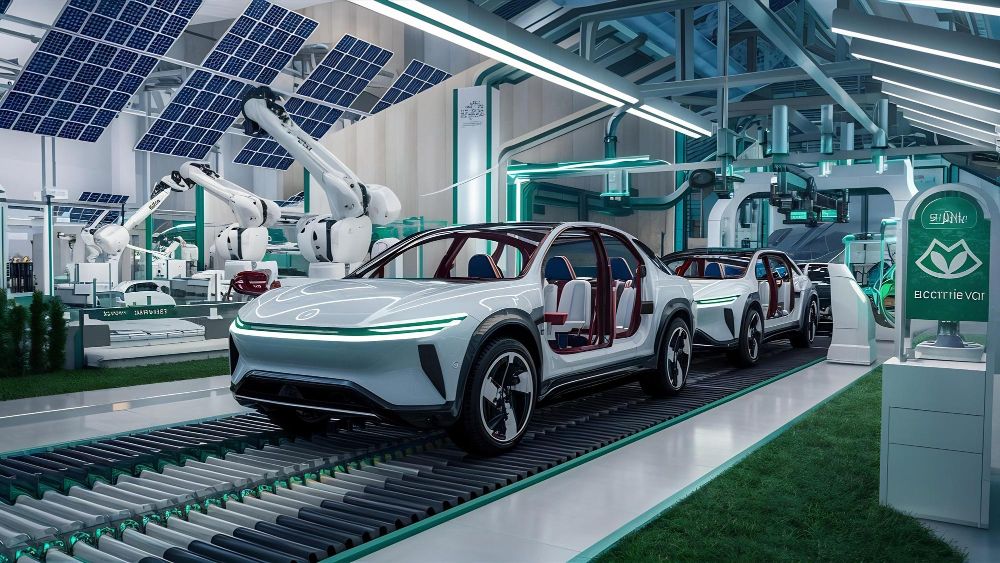
India’s electric vehicle industry is entering a major growth phase.
Investment is no longer focused only on electric cars and scooters. Companies are also spending on batteries, components, EV platforms, software, and local supply chains.
As a result, EV manufacturing in India is becoming a much larger industrial opportunity.
Major automakers are expanding production capacity. Battery manufacturers are building gigafactories. Global companies are also evaluating India as an export and manufacturing base.
This shift could transform India into a major global electric mobility hub.
Why EV Manufacturing in India Is Growing
Several factors are driving investment in India’s electric vehicle industry.
First, India has one of the world’s largest automotive markets. Demand for electric cars, scooters, buses, and commercial vehicles continues to grow.
Second, the country already has a strong automotive supplier network. Manufacturers can use this ecosystem to increase local sourcing.
Government incentives are another important factor. Programs supporting EVs, batteries, and advanced automotive technologies encourage domestic production.
At the same time, manufacturers want to reduce their dependence on imported EV components.
That is pushing investment into:
- Lithium-ion battery cells
- Battery packs
- Electric motors
- Power electronics
- Battery management systems
- EV software
- Charging equipment
- Advanced automotive components
Together, these investments are creating a broader Indian EV manufacturing ecosystem.
Major Companies Investing in Indian EV Manufacturing
Several Indian and international companies are expanding their electric vehicle operations.
Some are building dedicated EV plants. Others are investing in battery production, technology, and localisation.
Here are some of the most important companies to watch.
1. Tata Motors
Tata Motors has played a major role in India’s electric passenger vehicle market.
Through Tata Passenger Electric Mobility, the company continues to expand its EV portfolio and manufacturing capacity.
One major development was the acquisition of Ford India’s Sanand manufacturing facility in Gujarat.
Tata Passenger Electric Mobility acquired the plant for ₹725.7 crore. Production later began from the facility in 2024.
The company has also attracted significant investment into its EV business.
TPG Rise Climate and other investors previously committed ₹7,500 crore to Tata Passenger Electric Mobility.
These investments support Tata’s broader electric vehicle strategy.
The company is also developing different EV platforms for future vehicles.
Because of its scale, Tata remains an important player in electric car manufacturing in India.
2. Mahindra & Mahindra
Mahindra is making large investments in electric SUVs and dedicated EV technology.
Its strategy focuses heavily on electric-origin vehicle platforms.
The company has developed an EV manufacturing and battery assembly facility in Chakan, Maharashtra.
Mahindra initially allocated ₹4,500 crore to its electric-origin SUV program.
Planned investment linked to the program later increased further.
The Chakan facility uses automation, robotics, and advanced manufacturing systems.
Unlike some earlier EV strategies, Mahindra is developing vehicles around dedicated electric architectures.
That approach could improve vehicle design, battery packaging, and manufacturing efficiency.
Maharashtra is therefore becoming an important location for Mahindra’s electric mobility plans.
3. Maruti Suzuki
Maruti Suzuki’s entry into battery electric vehicles marks an important shift in the Indian market.
The company manufactures the e VITARA at its Hansalpur facility in Gujarat.
Suzuki is also positioning India as a global production base for the model.
In 2026, Maruti Suzuki began production at another plant within the Hansalpur manufacturing complex.
The additional facility increased overall production capacity.
More importantly, the e VITARA is not limited to the Indian market.
Vehicles manufactured in India are also intended for international markets.
This strategy strengthens India’s position as an EV export manufacturing hub.
It also shows how global automakers may increasingly use India for international EV production.
4. Hyundai Motor India
Hyundai is expanding its long-term manufacturing presence in India.
Its investment plans cover new vehicles, electrification, technology, and production capacity.
The company operates a major manufacturing facility in Tamil Nadu.
Hyundai has also expanded its production footprint through operations in Maharashtra.
Beyond vehicle manufacturing, the company is investing in battery and electrification research.
Indian universities are participating in several research programs supported by Hyundai Motor Group.
These projects include battery technologies and electric mobility research.
Such investments show that EV manufacturing involves more than vehicle assembly.
Research, engineering, batteries, and software will also play a major role.
Hyundai could therefore become an important contributor to the Indian electric vehicle manufacturing industry.
5. JSW MG Motor India
JSW is building an ambitious electric mobility strategy in India.
Through JSW MG Motor India and related businesses, the group is targeting several segments.
These include:
- Electric passenger vehicles
- Commercial EVs
- Electric buses
- Battery technologies
- Charging infrastructure
- Mobility services
JSW has discussed investments worth billions of dollars in its mobility businesses.
The group has also explored manufacturing expansion in states such as Gujarat and Maharashtra.
Localisation is another major part of the strategy.
JSW MG wants to increase the share of components sourced and manufactured in India.
Over time, this could reduce costs and strengthen the domestic EV supply chain.
6. Ola Electric
Electric two-wheelers represent one of India’s largest EV opportunities.
Ola Electric has built its manufacturing strategy around large-scale production.
The company operates its Futurefactory in Tamil Nadu.
It is also developing lithium-ion cell manufacturing through its Gigafactory operations.
Battery localisation is especially important for Ola.
Cells are one of the most valuable components in an electric vehicle.
Domestic production could reduce dependence on imported battery cells.
It could also improve supply-chain control.
Ola Cell Technologies has received capacity under India’s Advanced Chemistry Cell battery program.
That makes Ola an important company to watch in EV battery manufacturing in India.
7. Ather Energy
Ather Energy is another major electric two-wheeler manufacturer expanding production.
The company operates manufacturing facilities in Hosur, Tamil Nadu.
Its operations include electric scooter production and battery manufacturing.
Ather is also developing a new manufacturing facility in Maharashtra.
The project is known as Factory 3.0.
Once expanded, Ather expects its total manufacturing capacity to increase significantly.
This additional capacity will support future electric scooter demand.
Ather’s expansion also shows how India’s EV manufacturing footprint is spreading across several states.
Battery Manufacturing Is Becoming a Major EV Investment Opportunity
Electric vehicles are only one part of India’s manufacturing opportunity.
Battery production could become equally important.
Currently, battery cells represent a large share of an EV’s total cost.
India has historically depended heavily on imported cells and battery materials.
However, several companies are now investing in domestic manufacturing.
This could gradually increase local value addition.
It may also improve energy security and reduce supply-chain risks.
8. Amara Raja Energy & Mobility
Amara Raja is making a major move into advanced battery manufacturing.
The company is developing a large battery manufacturing ecosystem in Telangana.
Its planned Giga Corridor includes lithium-ion cell production.
Battery pack manufacturing is also part of the project.
The company has announced plans for several gigawatt-hours of cell manufacturing capacity.
Additional capacity is planned for battery packs.
Research and testing facilities are also included in the broader project.
These investments could strengthen India’s domestic battery supply chain.
They also support the country’s goal of reducing dependence on imported battery technology.
9. Exide Industries
Exide Industries is another established battery company entering lithium-ion cell production.
Through Exide Energy Solutions, the company is developing a new manufacturing facility near Bengaluru.
The planned capacity is around 12 GWh.
Production will support mobility and energy-storage applications.
Exide has already committed significant capital to the project.
The company’s move is important because it brings an established Indian battery manufacturer into advanced lithium-ion production.
This could increase competition in the Indian EV battery manufacturing market.
Reliance and Advanced Battery Manufacturing
Reliance is another major company participating in India’s battery manufacturing ecosystem.
Its plans include advanced battery technologies and energy-storage solutions.
The company has also received capacity under India’s Advanced Chemistry Cell manufacturing program.
Reliance’s involvement is important for several reasons.
It has substantial financial resources, industrial experience, and energy-sector expertise.
Those advantages could help the company build battery manufacturing at scale.
What About VinFast?
Vietnamese EV manufacturer VinFast has also entered the Indian market.
The company announced major investment plans connected to Tamil Nadu.
Its strategy has included vehicle assembly and possible deeper localisation.
However, manufacturing plans can change as companies evaluate market demand.
For this reason, investors should distinguish between three different activities:
- Vehicle imports
- CKD or local assembly
- Fully localised manufacturing
These models have very different effects on India’s domestic EV value chain.
Local sourcing and domestic component production remain key indicators of long-term manufacturing commitment.
Government Support for EV Manufacturing in India
Government policy remains an important driver of EV investment.
Several programs support electric mobility and advanced manufacturing.
Production Linked Incentive Scheme for Automobiles
The automotive PLI scheme encourages companies to manufacture advanced automotive technologies in India.
Electric vehicles and related components can benefit from this manufacturing push.
The program has already attracted substantial investment.
It has also supported the establishment of new manufacturing units.
Advanced Chemistry Cell PLI Scheme
Battery cells are critical to India’s EV manufacturing ambitions.
The Advanced Chemistry Cell program aims to encourage large-scale domestic battery production.
Selected companies are developing gigafactory projects under the scheme.
This could help create a stronger lithium-ion battery manufacturing ecosystem in India.
PM E-DRIVE Scheme
PM E-DRIVE supports India’s transition toward electric mobility.
Its focus includes EV adoption and charging infrastructure.
Higher EV demand can indirectly support domestic manufacturing.
As adoption increases, companies have more incentive to build local production capacity.
India’s Leading EV Manufacturing States
EV manufacturing investment is becoming concentrated in several major states.
Tamil Nadu
Tamil Nadu has developed one of India’s strongest electric mobility ecosystems.
Companies such as Ola Electric and Hyundai have major operations in the state.
VinFast has also selected Tamil Nadu for its Indian manufacturing activities.
A strong supplier ecosystem makes the state attractive to EV manufacturers.
Maharashtra
Maharashtra is becoming another important EV manufacturing centre.
Mahindra operates its advanced manufacturing complex in Chakan.
Ather is also expanding production in the state.
Other mobility companies are considering additional investment.
Gujarat
Gujarat already has a large automotive manufacturing industry.
Tata Motors and Maruti Suzuki have significant operations there.
The state is also attracting battery and EV supply-chain investments.
Karnataka
Karnataka combines manufacturing capabilities with a strong technology ecosystem.
Exide’s battery manufacturing project is one important example.
Bengaluru also provides access to software, engineering, and EV technology companies.
Telangana
Telangana is emerging as an important battery manufacturing location.
Amara Raja’s Giga Corridor is one of the largest projects in the state.
Battery materials and related technologies could create additional investment opportunities.
Key Trends Shaping EV Manufacturing in India
Several trends could define the next phase of the industry.
1. Battery Localisation
Battery localisation will remain one of the biggest priorities.
Manufacturers want to reduce their dependence on imported cells.
As a result, investment in gigafactories is increasing.
2. Dedicated EV Platforms
Automakers are moving toward platforms designed specifically for electric vehicles.
Dedicated EV platforms can improve battery placement and vehicle efficiency.
They can also support faster product development.
3. EV Exports From India
India could become an important EV export base.
Maruti Suzuki’s electric vehicle strategy already reflects this opportunity.
Other companies may follow similar models.
4. Local EV Component Manufacturing
The next investment wave may extend beyond complete vehicles.
Large opportunities exist in:
- Electric motors
- Inverters
- Controllers
- Power electronics
- Thermal management
- Battery management systems
- Semiconductors
- Lightweight materials
Domestic manufacturing of these components can increase local value addition.
5. Software-Defined Electric Vehicles
Modern EVs rely heavily on software.
Connected systems, battery analytics, vehicle updates, and artificial intelligence are becoming more important.
India’s software talent gives the country an advantage in this area.
Challenges Facing EV Manufacturers in India
Strong investment does not remove every challenge.
Battery raw materials remain heavily dependent on international supply chains.
Lithium, graphite, nickel, and other materials are concentrated in limited regions.
Cell manufacturing also requires large amounts of capital.
Companies need technology partnerships and high factory utilisation.
Price remains another challenge.
Many consumers still compare EV prices directly with petrol and diesel vehicles.
Charging availability can also influence purchasing decisions.
Therefore, manufacturing scale alone will not determine the winners.
Successful companies will need strong products, competitive pricing, localisation, and reliable supply chains.
What Investors and Industry Professionals Should Watch
Anyone tracking the Indian EV market in 2026 should watch several indicators.
The first is domestic battery cell capacity.
Another important factor is component localisation.
New EV platform launches will also provide useful signals.
Investors should also monitor factory utilisation rather than announced capacity alone.
Export volumes could become another important metric.
Finally, supplier investment will reveal how quickly the domestic ecosystem is developing.
Future of EV Manufacturing in India
India’s EV story is moving beyond vehicle adoption.
A much larger manufacturing ecosystem is beginning to develop.
Tata Motors and Mahindra are expanding electric vehicle production.
Maruti Suzuki is building EVs in India for domestic and international markets.
Meanwhile, Hyundai is combining manufacturing investment with research and electrification.
JSW is developing a broader electric mobility ecosystem.
Ola Electric and Ather are expanding electric two-wheeler production.
At the same time, Exide, Amara Raja, Reliance, and other companies are investing in battery manufacturing.
Together, these developments could reshape India’s automotive industry.
The opportunity also extends far beyond electric cars.
Battery cells, components, software, charging systems, and exports could become major growth areas.
India may therefore evolve from a large EV market into a global electric vehicle manufacturing hub.
Frequently Asked Questions
Which companies are investing in EV manufacturing in India?
Major investors include Tata Motors, Mahindra, Maruti Suzuki, Hyundai, JSW MG Motor India, Ola Electric, and Ather Energy. Battery companies such as Exide and Amara Raja are also expanding manufacturing.
Which companies are investing in EV battery manufacturing in India?
Ola Electric, Exide Industries, Amara Raja Energy & Mobility, and Reliance are among the companies investing in battery manufacturing and related technologies.
Which Indian states are becoming EV manufacturing hubs?
Tamil Nadu, Maharashtra, Gujarat, Karnataka, and Telangana are attracting significant EV and battery manufacturing investments.
Why are companies investing in India’s EV industry?
India offers a large automotive market, skilled engineering talent, established suppliers, and government support. Growing EV demand is another major factor.
Is India becoming an EV export hub?
Yes. Some manufacturers are already using Indian facilities to produce electric vehicles for overseas markets. This trend could grow as localisation improves.
What are the biggest EV manufacturing opportunities in India?
Key opportunities include electric vehicles, battery cells, motors, power electronics, charging equipment, battery management systems, software, and automotive components.
Conclusion
India is becoming one of the most important markets for electric vehicle manufacturing.
The next stage will focus heavily on localisation.
Battery production will also receive more investment.
At the same time, automakers are developing dedicated EV platforms and expanding manufacturing capacity.
Export opportunities could strengthen the industry further.
For manufacturers, suppliers, and investors, the opportunity extends across the entire EV value chain.
India’s electric mobility transition is no longer only about selling EVs.
It is increasingly about building EVs, batteries, components, and technology in India.
Share this content:

Post Comment