Fast Charging vs Battery Swapping: Which Is the Future of EVs in India?
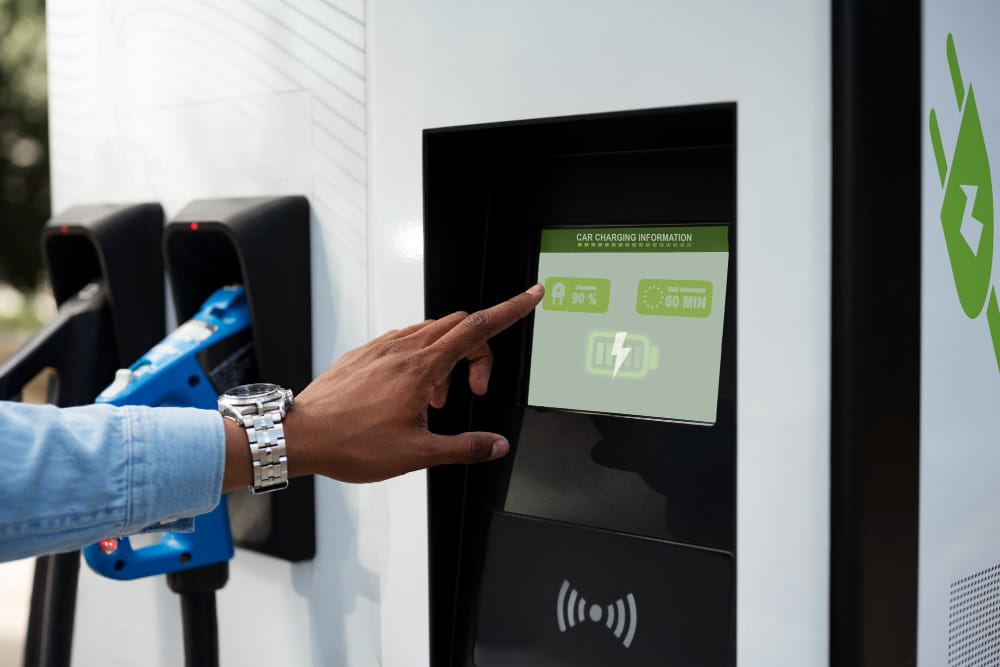
India’s electric vehicle market is growing rapidly, but one important question continues to shape the future of electric mobility: How should EVs get their energy—through fast charging or battery swapping?
Both technologies aim to solve one of the biggest challenges of electric vehicles: the time and convenience involved in replenishing a battery.
Fast charging allows an EV to remain connected to a high-power charger while electricity is transferred directly into the vehicle’s battery. Battery swapping takes a different approach. Instead of waiting for the battery to recharge, a discharged battery is removed and replaced with a charged one.
At first glance, battery swapping may appear faster, while fast charging may appear simpler. In reality, the answer is more complex.
For India’s diverse EV market, which includes electric scooters, auto-rickshaws, passenger cars, delivery vehicles, buses and commercial fleets, there is unlikely to be a single winner.
Fast charging is emerging as an important solution for electric cars and highway travel, while battery swapping can offer strong advantages for electric two-wheelers, three-wheelers and high-utilisation commercial fleets.
So, which technology is likely to shape the future of EVs in India?
This detailed comparison examines fast charging vs battery swapping in India, including how each technology works, costs, infrastructure requirements, advantages, limitations, business opportunities and future potential.
What Is Fast Charging for Electric Vehicles?
Fast charging is a method of supplying electricity to an EV battery at a relatively high power level so that the vehicle can recharge much faster than with conventional home or workplace charging.
Most electric vehicles can be charged through AC electricity at homes or offices. However, AC charging can take several hours depending on battery size and charging power.
DC fast charging reduces this time by delivering direct current to the vehicle battery at a much higher power level.
The actual charging speed depends on several factors, including charger output, vehicle battery capacity, battery temperature, state of charge and the maximum charging rate supported by the vehicle.
This means connecting an EV to an extremely powerful charger does not automatically make it charge at that charger’s maximum output. The vehicle itself must be designed to accept that level of power.
What Is Battery Swapping?
Battery swapping is an alternative method of powering an electric vehicle.
Instead of plugging the EV into a charger and waiting for its battery to recharge, the discharged battery is removed and replaced with another fully or sufficiently charged battery.
The discharged battery is then charged separately at a battery charging facility and can later be installed in another compatible vehicle.
India’s Ministry of Power issued dedicated Guidelines for Installation and Operation of Battery Swapping and Charging Stations in January 2025. The framework is intended to promote battery swapping as an alternative method of powering EVs, encourage Battery-as-a-Service models and develop a broader battery-swapping ecosystem.
Battery swapping is particularly relevant for vehicles where batteries are relatively small and can be designed for convenient removal and replacement.
This makes the technology especially interesting for electric two-wheelers, three-wheelers and commercial delivery vehicles.
Fast Charging vs Battery Swapping: The Basic Difference
The fundamental difference between fast charging and battery swapping is what happens to the battery.
With fast charging, the same battery remains inside the vehicle and receives electricity from a charging station.
With battery swapping, the vehicle leaves the station with a different charged battery while its original or another discharged battery enters the charging cycle.
This distinction influences everything from vehicle design and infrastructure costs to ownership models and consumer experience.
Which Is Faster: Fast Charging or Battery Swapping?
In terms of time spent replenishing energy, battery swapping can have a clear advantage in suitable applications.
A driver can potentially exchange a compatible depleted battery for a charged one within minutes.
Some automated systems can operate even faster. In March 2026, India’s Technology Development Board announced support for an indigenous automated battery-swapping project that was designed to complete a battery swap in under 40 seconds, particularly targeting commercial fleets and last-mile delivery applications.
Fast charging has also improved significantly.
Modern electric cars can recover a substantial amount of range during a short charging stop when connected to a suitable high-power DC charger.
However, fast charging generally still requires the vehicle to remain parked for longer than a well-designed battery swap.
Battery swapping therefore has an advantage where every minute of vehicle downtime directly affects revenue.
For a private electric-car owner taking a highway break, however, a short fast-charging session may be perfectly acceptable.
This difference in user behaviour is one reason the two technologies are likely to serve different segments.
Fast Charging in India in 2026
India’s public charging network has expanded rapidly.
According to the Ministry of Heavy Industries, BHEL portal data showed 52,718 public charging stations in India as of July 2026, including 16,561 public charging stations equipped with fast EV chargers for cars.
The government has also allocated ₹2,000 crore under the PM E-DRIVE Scheme for public EV charging infrastructure.
This support covers public charging infrastructure and also includes battery swapping and battery charging stations within the broader programme.
Fast charging is particularly important for passenger EV adoption because car owners need confidence that they can undertake long-distance journeys without excessive charging delays.
As electric-car battery ranges increase, reliable fast-charging corridors could become more important than simply installing large numbers of low-power chargers.
Battery Swapping in India in 2026
Battery swapping has moved from being an experimental concept to becoming a formally recognised part of India’s electric-mobility ecosystem.
The Ministry of Power’s 2025 guidelines apply to battery providers as well as owners and operators of battery charging and swapping stations.
The framework also recognises Battery-as-a-Service, or BaaS, where a service provider can own and manage batteries while users pay to access them rather than necessarily purchasing the battery outright.
This approach could be important in India because the battery represents a significant portion of an EV’s cost.
Separating battery ownership from vehicle ownership could potentially reduce the upfront purchase price of certain electric vehicles.
However, the success of this model depends on battery compatibility, network availability, pricing and trust in battery quality.
Fast Charging for Electric Cars
Passenger cars are one of the segments where fast charging has a natural advantage.
Most modern electric cars are designed with permanently integrated battery packs.
These packs are structurally integrated into the vehicle and can be large and heavy.
Designing every electric car so that its entire battery can be quickly removed would add engineering, safety and standardisation challenges.
Fast charging allows manufacturers to continue using integrated battery architectures while giving drivers the ability to replenish energy during highway journeys.
For everyday driving, many private owners can charge at home overnight.
Fast charging then acts as a supplementary solution for long trips or situations where home charging is unavailable.
This combination of home charging plus public fast charging is therefore likely to remain one of the dominant models for electric passenger cars in India.
Battery Swapping for Electric Two-Wheelers
India’s two-wheeler market creates a very different use case.
Electric scooters generally have much smaller batteries than electric cars.
Smaller batteries can be easier to remove, transport and exchange.
This makes battery swapping more practical.
The benefit becomes particularly strong for commercial users such as delivery riders who may travel throughout the day.
A private scooter owner who travels a short distance each day may be perfectly comfortable charging overnight at home.
A delivery rider working for many hours cannot necessarily afford to stop for an extended charging session.
Battery swapping can reduce this downtime.
For this reason, the future of electric two-wheelers in India may involve a combination of fixed-battery home charging and swappable-battery commercial models rather than one universal system.
Battery Swapping for Electric Three-Wheelers
Electric three-wheelers are another strong candidate for battery swapping.
E-rickshaws, cargo three-wheelers and other commercial vehicles can operate for long hours every day.
Their owners and drivers often depend directly on vehicle utilisation for income.
Long charging periods can therefore represent lost earning time.
A swapping station can allow a driver to replace a depleted battery and return to work much more quickly.
The economics become even more attractive when swapping stations are located in areas with high concentrations of commercial EVs.
For this reason, three-wheelers could become one of the strongest markets for battery-swapping infrastructure in India.
Fast Charging for Highway Travel
Fast charging has a major advantage when it comes to long-distance electric-car travel.
Drivers travelling between cities generally do not want to physically exchange their battery at every charging stop.
They need reliable charging stations located along highways and expressways.
A well-designed highway fast-charging hub can allow drivers to stop, recharge, use a restroom, eat or rest, and continue their journey.
As charging speeds improve, this experience can increasingly resemble a conventional highway stop rather than a lengthy interruption.
Fast charging corridors are therefore likely to become critical infrastructure for India’s electric-car market.
Battery Swapping for Delivery Fleets
Commercial delivery is one of the strongest applications for battery swapping.
India’s e-commerce, food delivery, grocery delivery and quick-commerce sectors depend heavily on two-wheelers and three-wheelers.
For these fleets, vehicle utilisation is extremely important.
A vehicle that spends hours charging cannot make deliveries during that period.
Swapping can significantly reduce energy-related downtime.
Fleet operators can also predict their routes, vehicle usage and battery demand more accurately than individual consumers.
This makes it easier to determine where swapping stations should be located and how many batteries need to be kept in circulation.
As a result, battery swapping could become particularly important for last-mile electric mobility.
Cost of Fast Charging Infrastructure
Fast-charging infrastructure can require significant capital investment.
A high-power charging station may need expensive charging equipment, electricity connections, transformers, civil works, networking, payment software and ongoing maintenance.
The financial model also depends heavily on utilisation.
An expensive fast charger that serves very few vehicles can take a long time to recover its investment.
This is why location is critical.
Highway corridors, busy commercial areas, large fleet locations and destinations with consistent EV traffic are more likely to support high charger utilisation.
Cost of Battery Swapping Infrastructure
Battery swapping has a different cost structure.
The swapping station itself may be relatively compact for two- and three-wheelers, but the operator needs to maintain an inventory of batteries.
Those batteries represent significant capital.
The network also needs charging equipment, battery monitoring, thermal and safety systems, software and logistics.
Therefore, battery swapping does not eliminate infrastructure cost. It moves part of the investment from vehicle charging hardware into a combination of stations and battery inventory.
For the model to work efficiently, batteries need to circulate frequently.
A low-utilisation swapping station can leave substantial capital tied up in batteries that are rarely used.
Battery Ownership: A Major Difference
One of the most significant differences between conventional charging and swapping is battery ownership.
With most fixed-battery EVs, the customer purchases the vehicle together with its battery.
The battery belongs to the vehicle owner.
Battery swapping can support a different approach.
Under Battery-as-a-Service, the battery provider may retain ownership of the battery while the customer pays a subscription, rental or usage fee.
This can potentially reduce the upfront cost of the EV.
However, users need confidence that replacement batteries are safe, properly maintained and capable of delivering adequate performance.
Transparent battery-health monitoring will therefore be important for the success of swapping networks.
The Standardisation Challenge
Battery standardisation is one of the biggest challenges facing large-scale swapping.
Electric vehicles can use different battery shapes, voltages, connectors, cooling systems, communication protocols and battery-management systems.
A swapping station cannot efficiently serve every vehicle if each manufacturer uses a completely different battery architecture.
Greater interoperability could improve network utilisation, but manufacturers may also want to differentiate their battery technology and vehicle design.
Finding the right balance between standardisation and innovation will therefore be important.
Fast charging faces compatibility challenges too, but standard charging connectors are generally easier to accommodate than physically interchangeable battery packs.
This gives fast charging an important advantage for passenger vehicles.
Battery Degradation and Safety
Battery health matters for both technologies.
Repeated high-power fast charging can influence battery ageing depending on battery chemistry, thermal management, charging strategy and vehicle design.
Modern battery-management systems can control charging power to protect the battery, particularly at high temperatures or high states of charge.
Battery swapping creates a different challenge.
Drivers may receive batteries that have been used by many different vehicles and users.
The operator therefore needs strong battery-health monitoring and quality-control systems.
A well-managed swapping network can potentially monitor batteries centrally and remove poorly performing units from circulation.
Safety and transparency will be crucial for consumer trust.
Which Technology Is More Convenient?
Convenience depends on the user.
For a private car owner with home parking, plugging in overnight can be extremely convenient.
That driver may only need fast charging during occasional long journeys.
Battery swapping would provide little additional benefit.
For a delivery rider who needs the vehicle continuously throughout the day, stopping for a long charging session is far less convenient.
A two-minute or even faster battery exchange can offer significantly more value.
Therefore, the correct question is not simply whether charging or swapping is more convenient.
The better question is which option is more convenient for a particular EV and usage pattern.
Fast Charging vs Battery Swapping for Private EV Owners
For most private electric-car owners, fast charging is likely to be the more practical long-term solution.
Home charging can handle regular daily requirements, while public fast charging supports longer journeys.
Consumers also retain ownership of their battery and do not need to depend on battery inventory at a swapping station.
For private electric scooters, the answer is less clear.
Some consumers may prefer removable batteries that can be charged inside their homes, particularly when they do not have charging access in their parking area.
Others may prefer traditional fixed-battery scooters.
Battery swapping may provide additional convenience in specific urban markets.
Fast Charging vs Battery Swapping for Commercial EVs
For commercial electric vehicles, battery swapping can become much more attractive.
The fundamental reason is utilisation.
A taxi, delivery scooter or cargo three-wheeler generates value when it is moving.
Reducing charging downtime can therefore have direct financial benefits.
However, high-power fast charging can also work effectively for commercial fleets when vehicles have scheduled breaks or return to central depots.
The future may therefore involve fleet operators choosing between the two technologies based on vehicle type, battery size, route predictability and operational economics.
Environmental Impact of Fast Charging and Battery Swapping
Both technologies ultimately depend on electricity.
Their environmental impact therefore depends heavily on how that electricity is generated and how efficiently energy is stored and delivered.
Renewable-energy integration can improve the environmental benefits of both charging and swapping.
Battery swapping stations may have an additional advantage because batteries can potentially be charged at controlled times rather than immediately whenever a vehicle arrives.
Operators could charge battery inventories during periods of lower electricity demand or higher renewable-energy availability.
Fast-charging networks can achieve similar benefits through battery storage and smart energy-management systems.
Role of Renewable Energy
India’s expanding renewable-energy sector could significantly influence the future of EV charging.
Fast-charging hubs can combine solar generation and stationary battery storage to reduce peak electricity demand.
Battery swapping operators can schedule battery charging during periods when solar electricity is abundant.
Smart charging systems can also adjust charging based on electricity prices, grid demand and renewable-energy availability.
The future competition may therefore not simply be fast charging versus swapping.
It could increasingly become a competition between different intelligent energy-management models.
Business Opportunities in Fast Charging
Fast charging creates opportunities for charging-network operators, highway infrastructure companies, energy businesses, charger manufacturers, real-estate owners and software providers.
As electric-car adoption rises, high-quality charging hubs can become valuable infrastructure.
The strongest locations are likely to be those combining high vehicle traffic with amenities and reliable electricity supply.
Petrol pumps, restaurants, hotels, malls and highway rest areas could increasingly integrate fast charging into their services.
Business Opportunities in Battery Swapping
Battery swapping creates a different set of opportunities.
Companies can provide swapping stations, Battery-as-a-Service subscriptions, fleet contracts, battery-health analytics, battery financing and battery-management software.
The model can be particularly attractive in dense urban areas where large numbers of similar commercial EVs operate within a relatively small geographical area.
Network density matters.
A user will only rely heavily on swapping if compatible stations are available where they regularly travel.
This creates an opportunity for operators capable of building large, reliable networks.
Government Support for Both Technologies
India’s government is not treating fast charging and battery swapping as mutually exclusive technologies.
The Ministry of Power has issued separate frameworks covering EV charging infrastructure and battery swapping.
The 2024 EV Charging Infrastructure Guidelines focus on developing connected and interoperable charging infrastructure, while the January 2025 battery-swapping guidelines formally support battery swapping and Battery-as-a-Service.
The PM E-DRIVE programme also provides substantial funding for the broader public charging ecosystem.
This suggests that India’s policy direction is not to select a single technology.
Instead, the objective is to develop multiple energy-replenishment solutions suited to different electric vehicles and operating environments.
Fast Charging vs Battery Swapping: Which Is Better for India?
There is no universal winner.
For electric passenger cars, fast charging has the stronger long-term use case.
Cars use large battery packs that are increasingly integrated into vehicle structures. Home charging can meet routine needs, while highway DC fast charging provides additional range during long journeys.
For electric two-wheelers and three-wheelers, particularly those used commercially, battery swapping can be extremely attractive.
Smaller batteries are easier to exchange, while faster turnaround can improve vehicle utilisation.
For electric buses, depot charging and high-power charging are likely to remain important because buses can follow predictable operating schedules.
For commercial fleets, the answer will depend on duty cycles. Some fleets may benefit from swapping, while others can use overnight or scheduled fast charging.
The Indian market is therefore likely to support both technologies simultaneously.
Will Battery Swapping Replace EV Charging?
Battery swapping is unlikely to completely replace plug-in charging in India.
The technical requirements of passenger cars make universal battery swapping difficult.
Different vehicle platforms use different battery sizes, structures and chemistries.
Fast charging also has the advantage of working without physically removing one of the most important components of the vehicle.
Battery swapping can instead become a complementary technology.
It may dominate certain high-utilisation vehicle categories without becoming the universal charging method for all EVs.
Will Fast Charging Replace Battery Swapping?
Fast charging is also unlikely to eliminate battery swapping.
Even if batteries can recharge much faster in the future, commercial operators may still prefer swapping when it offers near-instant vehicle turnaround and lower upfront vehicle costs through Battery-as-a-Service.
Fast charging requires vehicles to remain stationary while charging.
For businesses where every minute of downtime matters, swapping can retain a strong economic advantage.
The Future: Charging and Swapping Will Coexist
India’s future EV energy ecosystem is unlikely to be based on one technology.
Instead, it could develop into a multi-layered network.
Private electric-car owners may primarily charge at home and use fast chargers during long trips.
Commercial two- and three-wheelers may rely increasingly on battery-swapping networks.
Fleet operators may use dedicated charging depots.
Electric buses may charge at depots or opportunity-charging locations.
Future heavy commercial EVs may require extremely high-power charging infrastructure.
This approach allows each vehicle category to use the technology that best matches its operating requirements.
Fast Charging vs Battery Swapping: Future Outlook to 2030
By 2030, India’s electric mobility ecosystem is expected to be significantly larger and more sophisticated.
Fast charging technology will likely become more powerful and widespread, particularly across national highways, expressways and urban charging hubs.
Battery swapping could expand strongly in high-density urban markets and commercial vehicle categories.
Battery-as-a-Service could also develop into an important financing model by reducing the upfront cost of some EVs.
At the same time, improved batteries may reduce charging times and increase range, potentially changing the economics of both technologies.
The companies that succeed will be those that focus not merely on charging speed but on reliability, location, interoperability, battery safety and total cost of ownership.
Which Is the Future of EVs in India?
The future of EVs in India is not fast charging versus battery swapping. It is fast charging and battery swapping serving different mobility needs.
Fast charging is likely to play the larger role for passenger electric cars, highway travel and vehicles with integrated batteries.
Battery swapping is likely to be strongest for electric two-wheelers, three-wheelers, delivery vehicles and other commercial applications where downtime is expensive.
India’s unique mobility market makes a hybrid ecosystem particularly logical.
Instead of forcing one technology across every type of EV, the market can allow charging and swapping to develop wherever each provides the strongest economic and practical advantage.
Conclusion
The debate between fast charging vs battery swapping in India does not have a simple winner.
Fast charging provides flexibility, compatibility and a strong solution for private electric cars and highway journeys. India’s rapidly growing public charging network is making this option increasingly practical.
Battery swapping provides a different advantage: speed and high vehicle utilisation. It can be particularly valuable for electric scooters, three-wheelers, delivery fleets and other commercial vehicles.
India’s government is supporting the development of both charging and battery-swapping infrastructure, indicating that both technologies have roles to play in the country’s electric mobility transition.
For private passenger vehicles, fast charging is likely to become the dominant public energy-replenishment solution.
For high-utilisation electric two-wheelers and three-wheelers, battery swapping could become one of the most important infrastructure models.
Ultimately, India’s EV future will not be determined by a single charging technology. It will be shaped by an ecosystem in which fast charging, home charging, fleet charging and battery swapping work together to make electric mobility faster, easier and more economical.
Frequently Asked Questions
Is battery swapping better than fast charging?
Battery swapping can be faster and more suitable for high-utilisation commercial vehicles. Fast charging is generally more practical for electric passenger cars because it does not require removable and standardised battery packs.
Which is better for electric cars in India: fast charging or battery swapping?
Fast charging is likely to be more practical for most electric cars. Passenger EVs typically use large integrated battery packs, while home charging can handle daily needs and fast charging can support longer journeys.
Is battery swapping available in India?
Yes. Battery-swapping networks already operate in India, and the Ministry of Power issued dedicated Battery Swapping and Charging Station Guidelines in January 2025.
Which EVs are best suited for battery swapping?
Electric two-wheelers, e-rickshaws, electric three-wheelers and commercial delivery vehicles are particularly well suited because their batteries are smaller and vehicle downtime can directly affect earnings.
Is fast charging bad for EV batteries?
Frequent high-power charging can influence battery ageing, but the actual impact depends on battery chemistry, thermal management, temperature and the vehicle’s battery-management system. Modern EVs regulate charging to protect battery health.
How fast is battery swapping?
A battery swap can potentially be completed within a few minutes. Some automated Indian battery-swapping technologies being developed for commercial applications have demonstrated much faster exchange times.
Will battery swapping replace charging stations in India?
It is unlikely to replace conventional charging completely. Battery swapping is more likely to complement home, workplace and public fast charging.
What is Battery-as-a-Service?
Battery-as-a-Service is a model where the battery is owned and managed by a service provider rather than necessarily being purchased with the EV. Users can pay for access to batteries through rental, subscription or usage-based models.
What is the future of battery swapping in India?
Battery swapping has strong potential in electric two-wheelers, three-wheelers, last-mile delivery and fleet mobility, where reducing downtime is particularly valuable.
What is the future of fast charging in India?
Fast charging is likely to grow rapidly with electric-car adoption, particularly along highways, expressways, urban charging hubs and commercial destinations.
Which technology will dominate India’s EV market by 2030?
No single technology is likely to dominate every segment. Fast charging is expected to be important for passenger cars, while battery swapping could gain significant adoption among commercial two- and three-wheelers.
Is fast charging or battery swapping more profitable as a business?
Profitability depends on utilisation, location, electricity costs, infrastructure investment and vehicle segment. Fast charging can perform well at high-traffic locations, while battery swapping can be attractive in areas with concentrated commercial EV fleets.
Share this content:

Post Comment