Top Sustainability Trends in the EV Industry 2025

The electric vehicle (EV) industry is no longer just about reducing emissions; it is evolving into a fully sustainable ecosystem. As we move into 2025, manufacturers, governments, and consumers are focusing on innovations that make electric mobility greener across the entire lifecycle—from production to disposal. These sustainability trends are set to reshape the EV industry and accelerate its global adoption.
Greener Battery Technologies and Recycling
In 2025, one of the most significant trends is the shift toward sustainable battery solutions. Companies are investing in lithium-iron-phosphate (LFP) and solid-state batteries that offer longer lifespans, improved safety, and reduced reliance on rare earth minerals. Battery recycling and second-life applications are also becoming mainstream, with manufacturers setting up facilities to recover valuable materials and repurpose old batteries for energy storage systems. This closes the loop and reduces the environmental impact of EV production.
Renewable Energy-Powered Charging Networks
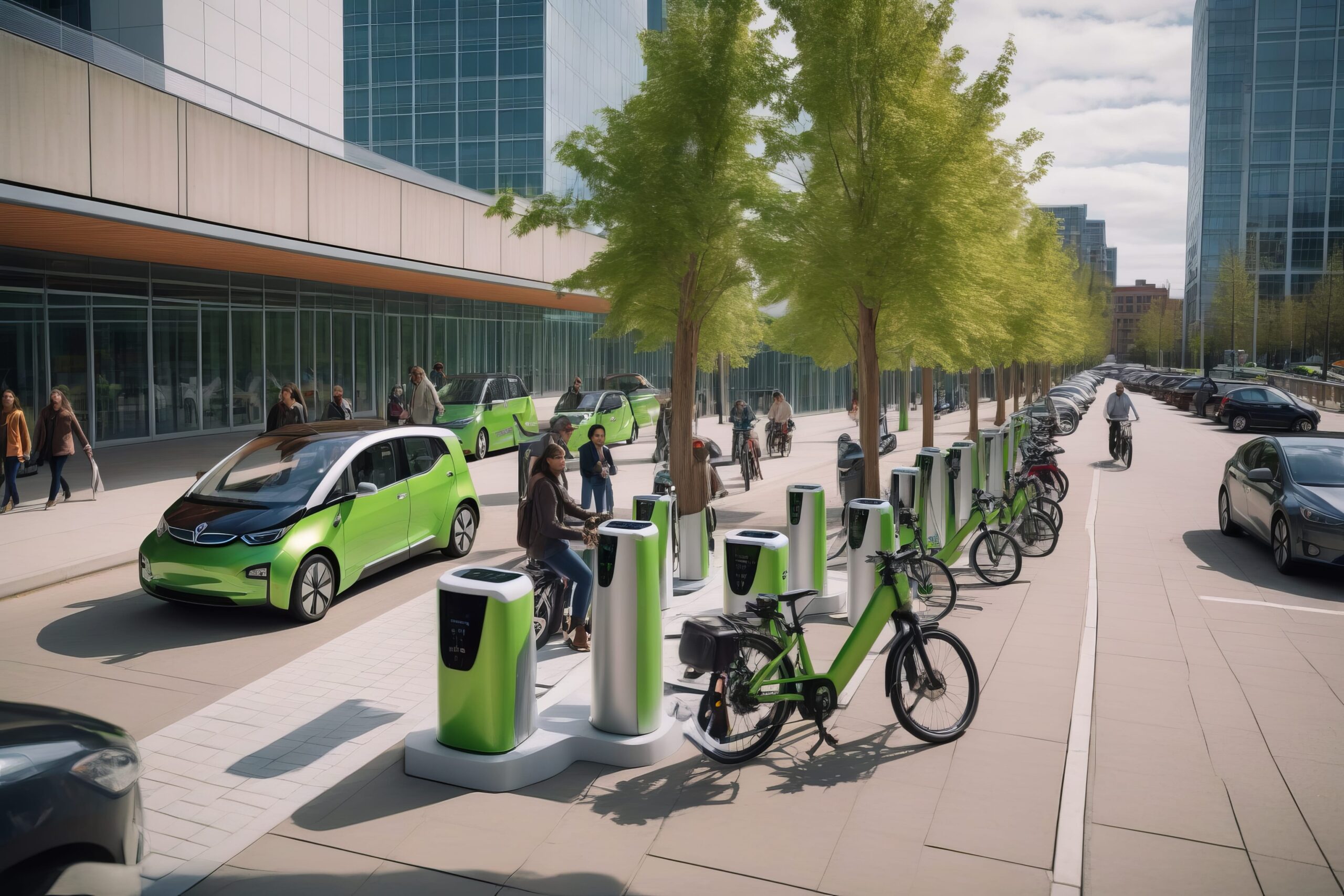
Sustainability in the EV industry extends beyond vehicles to how they’re charged. In 2025, more charging stations are being powered by solar, wind, and hybrid renewable sources. This transition ensures that the electricity fueling EVs is as clean as the vehicles themselves. Governments and private players are also working on smart-grid integration and vehicle-to-grid (V2G) technologies, allowing EVs to store and return power to the grid during peak demand, making the energy ecosystem more efficient.
Circular Economy and Sustainable Manufacturing
The EV industry is increasingly adopting circular economy principles. Automakers are focusing on using recycled materials, biodegradable composites, and low-carbon manufacturing processes to reduce the footprint of vehicle production. Supply chains are being restructured to emphasize ethical sourcing of raw materials, while localizing manufacturing helps lower transportation emissions. In 2025, these changes are positioning the EV sector as a model for sustainable industrial practices.
Conclusion
The EV industry in 2025 is defined by sustainability innovations across batteries, charging infrastructure, and manufacturing processes. By adopting greener technologies and circular economy principles, the sector is not only reducing its environmental impact but also making electric mobility more affordable, efficient, and scalable. These trends signal a future where EVs are not just a clean mode of transport but part of a truly sustainable ecosystem.
Share this content:


Post Comment