Public EV Charging Network Comparison in India: Coverage, Speed, Cost and Reliability
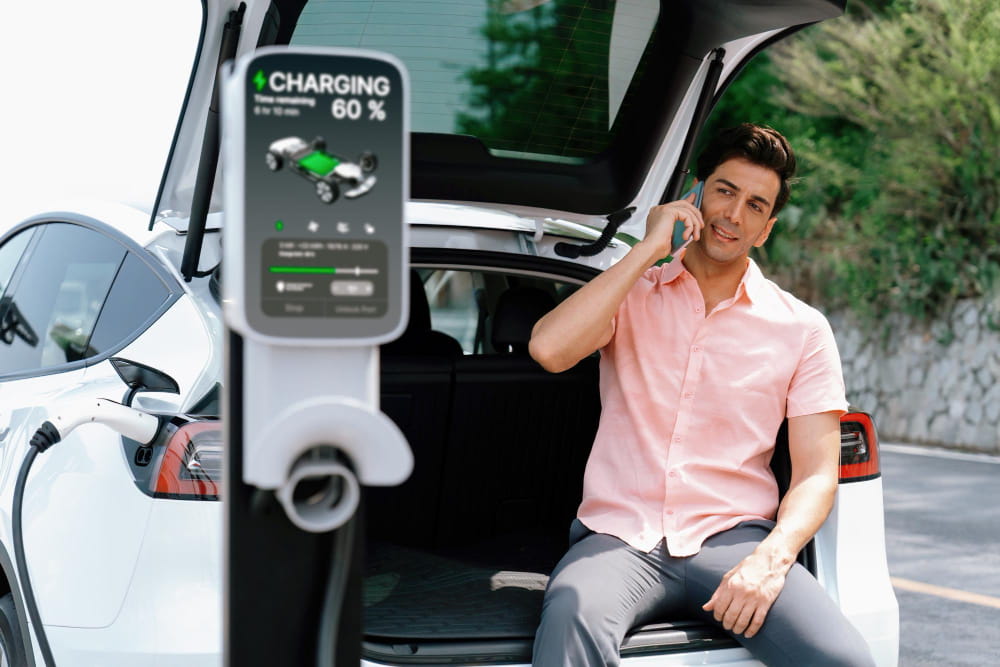
India’s electric vehicle charging ecosystem is expanding rapidly. As more electric cars enter the market, public charging stations are appearing across cities, highways, shopping centres, office complexes, hotels, fuel stations and other locations.
But having more charging stations does not automatically make public EV charging simple.
An EV owner may find several charging networks operating in the same city, each with its own locations, charging speeds, pricing structure, mobile application and payment process. The experience can become even more complicated during highway journeys, where charger reliability and location can be just as important as charging speed.
So, which public EV charging network is best in India?
There is no single answer for every EV owner. The most useful charging network is generally the one that provides reliable, compatible and conveniently located chargers on the routes a driver actually uses.
Understanding how to compare public charging networks can therefore be more valuable than simply choosing the operator with the largest advertised network.
What Is a Public EV Charging Network?
A public EV charging network consists of charging stations that electric vehicle owners can access outside their homes or private workplaces.
These chargers can be installed at dedicated charging hubs, fuel stations, malls, hotels, restaurants, parking areas, office complexes and highway facilities.
The companies operating these networks are commonly known as Charge Point Operators, or CPOs.
Depending on the operator and location, drivers may be able to locate chargers, check availability, start charging sessions and make payments through a mobile application.
Public charging is particularly important for EV owners who cannot install a charger at home and for drivers travelling beyond their vehicle’s normal daily range.
As India’s EV market grows, the quality of these public networks will increasingly influence the overall EV ownership experience.
Public EV Charging Infrastructure in India
India’s public charging infrastructure has expanded significantly.
According to information released by the Ministry of Heavy Industries in July 2026, India had 52,718 public EV charging stations, including 16,561 stations equipped with fast chargers for cars.
Government support is also helping expand the network. Under PM E-DRIVE, ₹2,000 crore has been allocated for the installation of public EV charging infrastructure.
The objective is not simply to increase the number of charging points. India also needs charging infrastructure that is reliable, accessible and sufficiently distributed across cities and major travel corridors.
For EV owners, this distinction matters.
A charger shown on a map has limited value if it is incompatible with the vehicle, occupied, unavailable or unable to deliver the expected charging performance.
Major Public EV Charging Networks in India
India now has multiple companies developing and operating EV charging infrastructure.
Drivers may encounter networks operated by companies such as Tata Power, Statiq, ChargeZone, Jio-bp and other charging providers depending on the city or highway.
Rather than selecting a network purely because of its brand name, EV owners should compare operators according to their own driving requirements.
The most important factors include where chargers are located, whether they support the vehicle, how quickly they can charge, how much charging costs and how reliably the stations operate.
This means the largest charging network is not automatically the best network for every driver.
Charging Network Coverage: Location Matters More Than Numbers
Network size is often used to compare EV charging companies.
However, total charger count tells only part of the story.
Imagine one network has thousands of charging points concentrated in major metropolitan areas, while another has fewer chargers but strong coverage along the highways you regularly travel.
For a city commuter, the first network might be more convenient.
For someone frequently travelling between cities, the second could be considerably more useful.
When comparing EV charging network coverage in India, drivers should therefore look at the actual locations of chargers rather than only the operator’s total network size.
Check whether chargers are available near your home, workplace and frequently visited destinations.
For highway travel, look at the distance between charging stations along the route and whether alternative charging locations are available nearby.
Good network coverage is ultimately about having a working charger where you need it.
AC Charging vs DC Fast Charging
Not every public EV charger provides the same charging experience.
Public charging infrastructure broadly includes AC chargers and DC fast chargers.
AC charging is generally suitable when a vehicle will remain parked for a longer period. It may be useful at workplaces, hotels, residential areas and shopping destinations where the driver does not need to leave immediately.
DC fast charging is more important when reducing charging time is the priority.
This makes DC charging particularly useful on highways and during long-distance journeys.
However, a charger’s advertised maximum power does not necessarily represent the charging speed an EV will receive throughout the session.
The vehicle itself has a maximum charging capability. Battery temperature, state of charge and the vehicle’s charging curve can also influence charging performance.
A car capable of accepting a lower charging rate will not suddenly charge at the charger’s maximum output simply because it is connected to a more powerful station.
Charging Speed: Faster Is Not Always Better
Charging speed is one of the first specifications EV owners notice when comparing public charging networks.
But simply choosing the charger with the highest kilowatt rating can be misleading.
The important question is whether the charger and vehicle are well matched.
For example, connecting an EV with relatively modest DC charging capability to an extremely high-powered charger may provide little additional benefit compared with using a lower-powered fast charger.
Charging speeds can also decrease substantially as the battery approaches a high state of charge.
This is why EV road-trip planning should consider expected charging time rather than charger power alone.
The fastest charger on paper is not necessarily the charger that will save the most time during a real journey.
Public EV Charging Cost in India
The cost of public EV charging in India varies between operators and locations.
Unlike petrol or diesel, where fuel is typically displayed using a familiar price-per-litre format, EV charging tariffs can be presented differently depending on the charging provider.
Drivers should therefore check the current tariff before starting a charging session.
Charging cost may depend on the amount of electricity consumed, charger type, charging speed, location and the commercial model used by the operator.
Public DC fast charging can also cost more than charging an EV at home.
This does not necessarily make public charging expensive compared with conventional fuel. Instead, it means EV owners should distinguish between two different use cases.
Home charging is generally the foundation of routine EV ownership for drivers who have access to it. Public fast charging provides convenience when travelling beyond normal daily range or when private charging is unavailable.
Home Charging vs Public Charging
For many private EV owners, home charging remains one of the most convenient ways to charge.
A vehicle can be connected after returning home and charged while parked overnight.
Public charging serves a different purpose.
It enables drivers to extend the usable travel range of an EV, complete intercity journeys and operate a vehicle even when private charging is not available.
The two systems should therefore be viewed as complementary rather than competing solutions.
An EV owner with reliable home charging may use public chargers only occasionally.
A driver living in an apartment without dedicated parking or charging access may depend much more heavily on public infrastructure.
This difference can significantly influence which charging network is most suitable.
Charger Reliability Is as Important as Charging Speed
A 120 kW charger that does not work is less useful than a reliable lower-powered charger.
This simple point is one of the most important factors when comparing public EV charging networks.
Drivers depend on charging stations being operational when they arrive.
Problems can include damaged connectors, communication failures, payment issues, chargers appearing available in an app when they are occupied or unavailable, and stations operating below their expected power.
This is why charger uptime and reliability should become major measures of charging-network quality.
For EV owners, especially those travelling on highways, knowing that a charger is likely to work can be more valuable than knowing that the network has installed a large number of stations.
Why Real-Time Charger Status Matters
A good EV charging app should do more than display charging-station locations.
Ideally, drivers should be able to determine whether a charger is available before travelling to it.
Real-time information can reduce the risk of arriving at a station only to discover that the charger is already occupied or unavailable.
For highway journeys, this becomes particularly important.
If the next charger is a considerable distance away, inaccurate availability information can create unnecessary range anxiety.
As India’s charging ecosystem matures, accurate real-time charger status could become one of the most important differentiators between public charging networks.
EV Charging Apps and the Problem of Fragmentation
One challenge facing Indian EV owners is the number of charging applications they may need.
Different Charge Point Operators can have separate apps, accounts, wallets and payment processes.
A driver using several charging networks may therefore need multiple applications simply to travel across different locations.
This creates friction compared with the simplicity of conventional fuel stations.
Interoperability can help address this problem.
India’s EV charging policy framework has increasingly emphasised connected and interoperable charging infrastructure.
A more interoperable ecosystem could eventually allow EV owners to locate, access and pay for charging across multiple networks with fewer barriers.
For drivers, this could be just as important as installing additional chargers.
Connector Compatibility
Before travelling to a public charging station, EV owners should check whether the charger is compatible with their vehicle.
Electric vehicles can support different AC and DC charging standards depending on the model.
A charging station may also contain multiple connectors, but this should not be assumed.
Drivers should verify compatibility through their vehicle documentation and the charging operator’s current station information.
This is particularly important when planning a long-distance journey.
A charger located perfectly along a route provides no practical benefit if the vehicle cannot use its connector.
Public Charging Networks for City Driving
City drivers have different charging requirements from highway users.
For urban EV owners, convenient charger locations may matter more than extremely high charging speeds.
A charger near an office, shopping centre, restaurant or another place where the vehicle will already remain parked can be highly useful.
Drivers who cannot charge at home may place even greater importance on public chargers located close to their residence.
For city use, a strong public charging network should therefore combine convenient locations, good availability, reliable operation and straightforward payments.
Public Charging Networks for Highway Travel
Highway EV charging creates a different set of priorities.
Charging speed becomes more important because drivers usually want to continue their journey quickly.
But location quality matters too.
A charging station near restaurants, toilets and other facilities allows passengers to take a break while the vehicle charges.
Multiple charging points at the same location can also be preferable to a site with only one charger because they reduce the risk of waiting when another EV is already charging.
For highway users, the ideal network therefore combines reliable DC fast charging, strategic locations, multiple charging points and useful amenities.
Why Every EV Road Trip Should Have a Backup Charger
EV drivers should avoid planning long journeys around a single charging station whenever alternatives are available.
Even a well-maintained charger can occasionally be occupied or temporarily unavailable.
Before beginning an unfamiliar route, drivers should identify their preferred charging stop and at least one alternative.
The backup station should ideally be reachable without requiring the battery to fall to an uncomfortably low level.
Maintaining a reasonable battery buffer can make long-distance EV travel much less stressful.
The objective is not to arrive at every charger with the lowest possible battery percentage. It is to complete the journey efficiently while maintaining enough flexibility to deal with unexpected changes.
What Makes a Good Public EV Charging Station?
The quality of a charging station depends on much more than power output.
Location accessibility matters. Drivers should be able to enter and leave the charging site easily.
The station should also be clearly identifiable and accessible during its advertised operating hours.
Lighting and general site conditions become particularly important for drivers charging at night.
Highway charging sites benefit from nearby toilets, food and rest areas.
Customer support also matters. If a charging session fails, drivers need a straightforward way to contact the operator and resolve the problem.
A well-designed charging location therefore combines hardware reliability with a good overall user experience.
How to Compare Tata Power, Statiq, ChargeZone, Jio-bp and Other Networks
There is little value in declaring one charging company the permanent winner because public charging networks are constantly changing.
New chargers are installed, existing locations are upgraded and pricing structures can change.
Instead, EV owners comparing networks such as Tata Power, Statiq, ChargeZone, Jio-bp and other operators should evaluate them according to the same criteria.
First, check which network has the strongest presence along the routes you actually drive.
Then compare available charging speeds and compatibility with your EV.
Check current tariffs in the respective apps and determine whether prices are clearly displayed before charging.
Look at real-time charger availability where offered and consider the convenience of the payment process.
For regular highway travellers, investigate whether the network provides multiple fast-charging sites along important intercity routes.
Finally, consider your own previous charging experiences. A network that consistently works for you can be more valuable than one that looks larger on paper.
Which Public EV Charging Network Is Best?
The best EV charging network in India depends on the driver.
Someone primarily driving within one city may prefer the network with the greatest concentration of reliable chargers near home and work.
A frequent highway traveller may value a network with strategically located DC fast chargers along intercity routes.
An EV owner without home charging may prioritise affordable public chargers near their residence.
Another driver may care most about charger uptime and a simple mobile application.
This is why EV charging networks should not be compared using a single metric.
Coverage, reliability, speed, cost, compatibility and ease of use all matter.
How to Reduce Public EV Charging Costs
Drivers who have access to home charging can often reduce their dependence on public fast charging by beginning regular journeys with an adequately charged battery.
Public DC fast chargers can then be reserved primarily for long journeys and situations where additional range is genuinely required.
Efficient driving can also reduce the amount of energy that needs to be purchased during a journey.
EV owners should additionally check current charging tariffs before starting a session rather than assuming that all public chargers cost the same.
The cheapest charger is not always the best option, however.
Driving a significant distance away from the planned route simply to obtain a lower charging tariff may consume additional energy and time.
Charging decisions should therefore consider cost, convenience and journey time together.
The Future of Public EV Charging in India
India’s public charging ecosystem is likely to become increasingly important as electric vehicle adoption grows.
Government support under programmes such as PM E-DRIVE is helping expand public charging infrastructure, while private operators continue investing in charging networks.
The next phase will need to focus on more than the number of chargers installed.
Reliability, interoperability, payment convenience, charger utilisation and highway coverage will become increasingly important.
Faster charging technology may reduce charging times for vehicles capable of supporting higher power.
Charging hubs with multiple connectors could also improve reliability by reducing dependence on a single charging point.
Better integration between charging networks could make it easier for drivers to discover and access chargers without managing numerous separate applications.
In the longer term, public EV charging may increasingly integrate with renewable energy, battery storage and intelligent energy-management systems.
Conclusion
India’s public EV charging network is expanding, giving electric vehicle owners more options for city and long-distance travel.
However, choosing the best charging network requires more than comparing the number of charging stations installed by different companies.
A useful public charging network needs chargers in the right locations, compatible connectors, appropriate charging speeds, transparent pricing and dependable operation.
For city drivers, convenience and proximity may be the biggest priorities. For highway travellers, reliable DC fast chargers, multiple charging points and strategically located stations become more important.
EV owners should also avoid depending entirely on one charging provider. Having access to multiple networks and identifying backup chargers can make long-distance electric driving considerably easier.
As India’s charging infrastructure grows, the competition between public EV charging networks will increasingly move beyond who has the most chargers.
The networks that provide the most value to EV owners will be those that make charging reliable, accessible, transparent and easy to use.
Ultimately, the best public charging network is not necessarily the largest one. It is the network that provides a working charger, at the right location, when the driver actually needs it.
Share this content:
Post Comment